


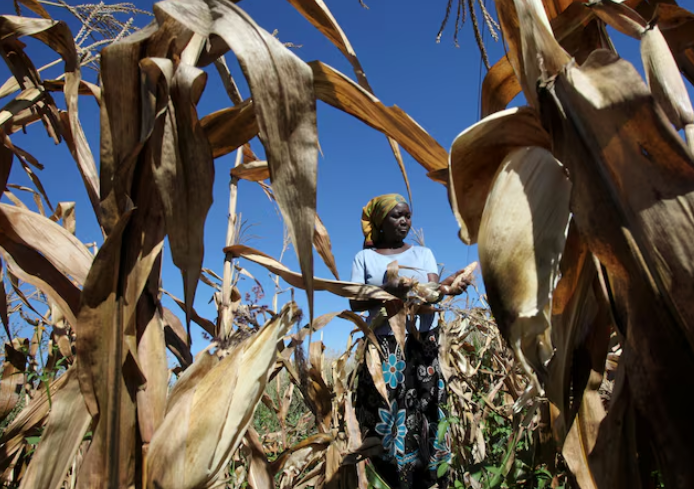
Subsistence farmer Joice Chimedza harvests maize on her small plot in Norton, a farming area outside Zimbabwe's capital Harare, May 10, 2016.
According to Permanent Secretary at the Ministry of Agriculture, Obert Jiri, favorable rainfall conditions boosted production, reversing the sharp decline caused by last year’s El Nino-induced drought. The 2023/24 season saw maize output fall to about 800,000 metric tons, compared with 2.3 million metric tons two years earlier. That shortage forced authorities to temporarily suspend import restrictions, including allowing genetically modified maize, to address food supply challenges.
This year’s improved harvest, supported by state initiatives such as the Pfumvudza smallholder programme, has restored maize stocks to levels sufficient for national consumption. Zimbabwe typically requires around 1.8 million metric tons of maize annually. Jiri emphasized the government’s focus on maintaining local demand: “We assess the situation every day. We must protect local purchases from our local farmers.”
While the rebound offers relief, experts caution that agriculture in Zimbabwe remains highly exposed to weather variability. Independent analyst Paul Chidziva noted that around 70% of the population depends on farming, leaving households and the wider economy vulnerable to future droughts or extreme weather conditions linked to climate change.
To mitigate risks, the government is promoting cultivation of drought-tolerant crops such as sorghum and millet. Officials view the current surplus as an opportunity to build stronger food security and reduce dependence on imports, which have previously strained foreign currency reserves.
In 2020, successive droughts forced Zimbabwe to import maize worth $300 million, contributing to widespread food shortages that left more than half of the population in need of assistance. By contrast, this year’s favorable harvest highlights the benefits of supportive policies combined with favorable weather.
The reinstated import ban is expected to safeguard domestic producers, stabilize supply chains, and strengthen resilience in the agricultural sector. With consumption needs secured, Zimbabwe aims to focus on sustaining output levels, expanding climate-adapted crop production, and improving long-term food security.
The current situation reflects both progress and continuing challenges: while strong rainfall and supportive policies have enabled recovery, the sector’s dependence on weather underscores the importance of diversifying crops and strengthening resilience against climate risks. The government’s efforts to combine policy support, farmer protection, and crop diversification highlight a strategy to stabilize the maize market and reduce reliance on imports over time.
