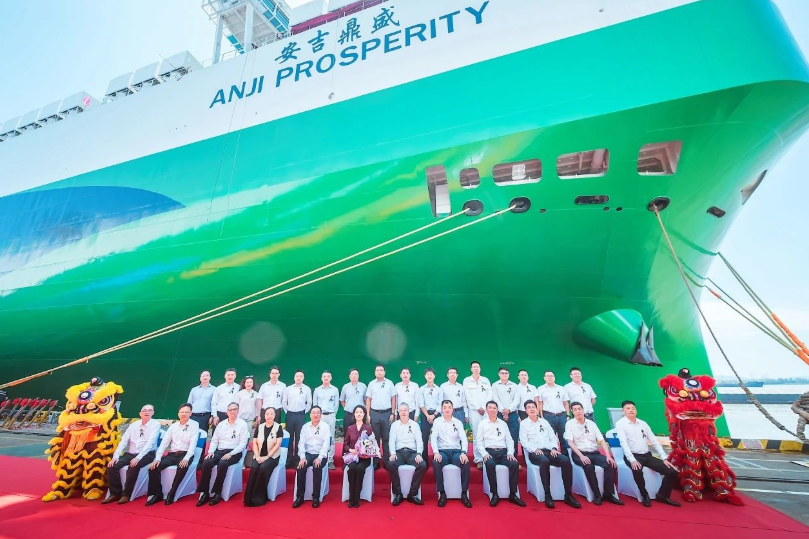
The ANJI PROSPERITY is set to begin its maiden voyage to Europe, enhancing Anji Logistics’ capacity for long-haul transportation. This addition strengthens the company’s ability to support SAIC Motor’s expanding global presence. SAIC Motor’s vehicles are distributed across more than 170 countries and regions, with cumulative overseas sales surpassing six million units. Europe has emerged as a significant market, with approximately 300,000 vehicles delivered annually. Notably, SAIC’s MG brand recorded nearly 180,000 vehicle deliveries in Europe from January to July this year, achieving double-digit growth compared to the previous year.
Anji Logistics plays a vital role in supporting SAIC Motor’s international expansion strategy. The company operates China’s largest self-owned car carrier fleet, now comprising 38 vessels. To enhance efficiency, Anji Logistics has implemented digital tracking and intelligent dispatch systems, streamlining operations across its network. The company supports eight major international routes, connecting regions such as Southeast Asia, Mexico, the Persian Gulf, and Europe.
Wang Xiaoqiu, Chairman of SAIC Motor, stated: “The addition of ANJI PROSPERITY to our fleet marks a significant step in strengthening our global logistics capabilities, ensuring efficient and sustainable delivery of our vehicles worldwide.”
The launch of ANJI PROSPERITY underscores Anji Logistics’ commitment to advancing sustainable transportation solutions. The vessel’s energy-efficient design aligns with industry trends toward greener operations, supporting the global demand for environmentally responsible logistics. By expanding its fleet and optimizing its network, Anji Logistics continues to facilitate SAIC Motor’s growth in key markets, particularly in Europe, where demand for its vehicles remains strong.
This development highlights the strategic importance of robust logistics in the automotive industry. Anji Logistics’ investment in modern vessels and digital systems positions it to meet the challenges of global vehicle distribution while contributing to the broader adoption of sustainable practices in maritime transport.