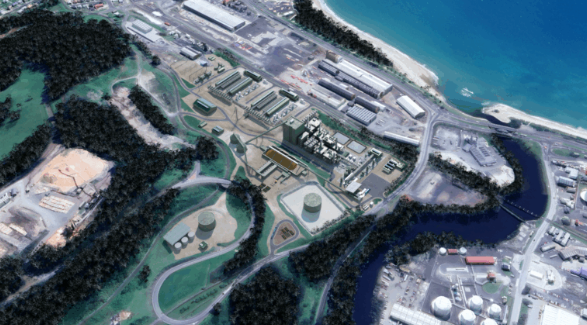
The project, known as HIF Tasmania, was first unveiled in July 2022 with an initial plan to locate the facility on a sustainable forestry plantation in Hampshire, about 30 kilometers south of Burnie. After conducting engineering, design, and site evaluations, HIF concluded that the former Pulp Mill site offers stronger advantages, including cost-effective modular construction and direct port access, making it more suitable for the facility.
The new plant is projected to produce over 200,000 tonnes of e-methanol annually. It is also expected to generate several hundred jobs during the construction phase and approximately 200 permanent positions once operations begin.
Ignacio Hernandez, CEO of HIF Asia Pacific, said: “Burnie’s industrial heritage and deepwater port make the old Pulp Mill site the ideal location. Relocating here allows us to bring employment back to this historic site while enabling efficient delivery of large equipment and sustainable use of local resources, such as recycled wastewater from Round Hill Sewage Treatment Plant.”
He added: “We are especially keen to hear from as many people as possible over the coming months so that we can build their feedback into our design. Very soon we will advertise community events where local people can come and ask us questions.”
Ian Jones, President of Business North West, emphasized the significance of the project: “The Pulp site is hugely significant to Burnie and has sat idle and rusting for far too long. I have followed the progress of this project very closely over the last three years and believe this is a golden opportunity for the town to be at the forefront of a new, emerging industry.”
HIF Asia Pacific plans to submit a formal Notice of Intent to the Tasmanian Environmental Protection Agency in the coming weeks, with a Development Application expected in 2026. The facility could potentially begin operations by 2030.
E-fuels, such as the e-methanol planned for production in Tasmania, are created by using renewable electricity to power electrolyzers that split hydrogen from water. This hydrogen is then combined with recycled carbon dioxide from plantation residues to produce a synthetic fuel suitable for shipping.
In related developments, HIF signed a Heads of Agreement earlier this year with German energy company Mabanaft for the offtake of e-methanol targeted at the shipping sector. Additionally, HIF recently received approval for the first domestic e-fuels pathway under the California Air Resource Board’s Low Carbon Fuel Standard program.
Through this project, HIF Global aims to advance renewable energy use while providing significant economic and social benefits to Tasmania.