The main objective of the partnership is to accelerate the electrification of ships by developing new applications for propulsion charging, thereby reducing dependence on fossil fuels both at berth and during voyages. Under the MoU, the two companies will work together to utilize SPG’s expertise in shore power supply and support the expansion of NatPower’s international shore power network, linking SPG’s ports to the wider global green corridor system.
The collaboration also prioritizes the export and large-scale application of these solutions. Initial projects will begin in Hong Kong and mainland China, followed by expansion into Europe. The partnership is expected to speed up the introduction of one-stop charging services for international shipping operators, lowering emissions significantly and supporting the broader energy transition in major global maritime hubs.
Stefano D.M. Sommadossi, CEO of NatPower Marine UK and joint director of Wah Kwong NatPower, stated: “Together, we are turning ambition into action and creating the infrastructure that will power the next era of sustainable shipping.”
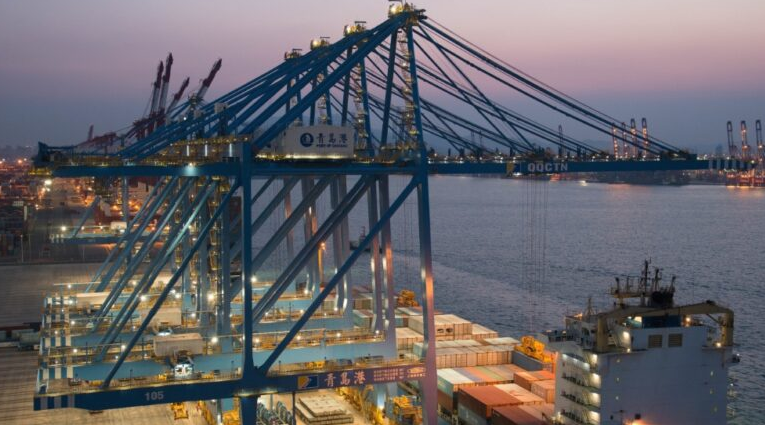
Zhang Baohua, general manager of Qingdao Port International, added: “It is our shared vision to develop green port infrastructure and reduce emissions in shipping, which is central to establishing Qingdao as a leading international shipping centre.”
Earlier this year, NatPower Marine and Wah Kwong Maritime Transport formed a joint venture to deploy large-scale shore power and vessel charging systems across Asia. Through this initiative, Wah Kwong NatPower will start with projects in Hong Kong from 2026 before expanding into Greater China and North Asia.
The approach seeks to cut emissions by enabling ships to plug into grid-connected electricity while docked, powering onboard operations and recharging batteries for near-shore propulsion. By integrating shore power and charging solutions into port infrastructure, the collaboration supports global shipping’s transition to cleaner energy.
The Wah Kwong NatPower and SPG agreement represents a significant step toward transforming port operations and shipping practices. It highlights the potential of combining industry expertise and international cooperation to develop scalable, sustainable solutions for the maritime sector. With projects planned in Asia and Europe, the partnership underscores how collaborative infrastructure development can accelerate the decarbonisation of shipping and enhance the role of ports in global energy transition efforts.