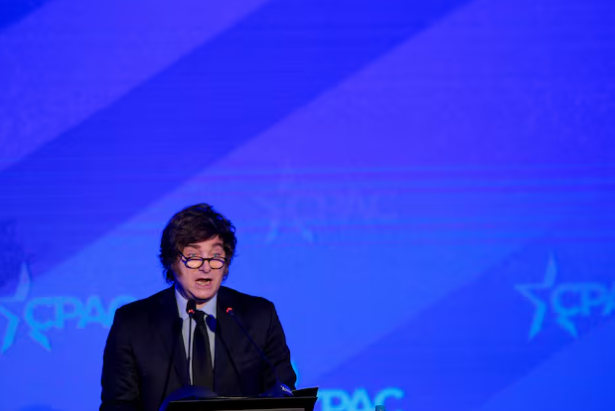
Argentina's President Javier Milei speaks during the Conservative Political Action Conference (CPAC), in Asuncion, Paraguay September 16, 2025.
According to government spokesperson Manuel Adorni, the plan involves selling 44% of NA-SA shares through an international public tender. The state will keep a controlling 51% stake, while up to 5% will be allocated under a joint ownership scheme. NA-SA currently operates Atucha I, Atucha II, and Embalse, Argentina’s three active nuclear power facilities.
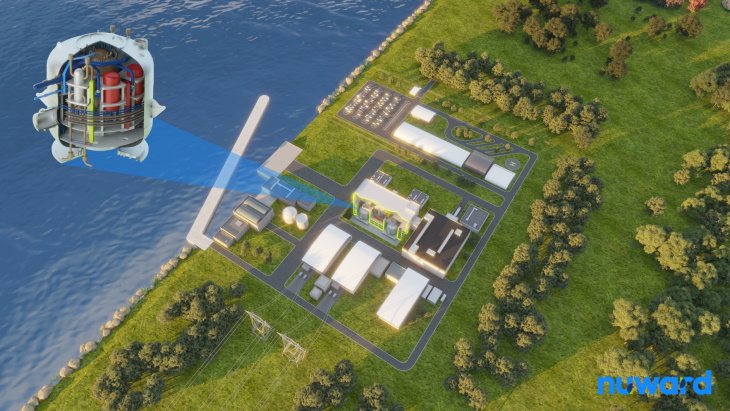
Adorni said: "The idea is to promote private investment to build Argentina's first modular reactor and boost uranium mining." He also reiterated that all state-owned enterprises are subject to review and possible privatization under the current administration’s program.
Since taking office in December 2023, Milei has emphasized fiscal discipline as a central policy priority. His government has introduced measures to reduce spending and address a high inflation rate, which was in triple digits when he assumed office. The planned restructuring of NA-SA aligns with these efforts to attract private capital and expand investment opportunities in key industries.
In a statement released separately, the government explained that private participation is seen as essential for accessing financing, sharing risks, and maintaining the company’s operations in what it described as an "efficient and competitive manner." Officials highlighted that the nuclear sector requires sustained investment to secure long-term growth, with new projects such as modular reactors viewed as strategic for Argentina’s energy future.
The proposal, however, has faced criticism from representatives of workers in the nuclear sector. A group linked to the National Commission for Atomic Energy and Nuclear Activity expressed concern over the plan, arguing that the state should remain central in supervising nuclear energy development and safety standards.
The group said: "Privatizing NA-SA won't improve people's lives, but rather incentivize increasing fares to match the market rate, with citizens paying the difference to bump up the profitability of a private company." Their statement warned that partial privatization could result in higher energy costs for consumers and weaken state oversight in a sensitive sector.
Industry observers note that Argentina’s nuclear program has long been tied to public institutions, with NA-SA playing a key role in managing infrastructure and operations. The government’s decision to partially privatize the firm signals a shift toward involving private actors more directly in the sector’s future development.
The upcoming international tender is expected to draw interest from both domestic and foreign investors, given the scale of the nuclear facilities and the government’s stated ambition to develop modular reactor technology. The process will be closely watched as part of Argentina’s broader economic reforms and restructuring of state assets.