


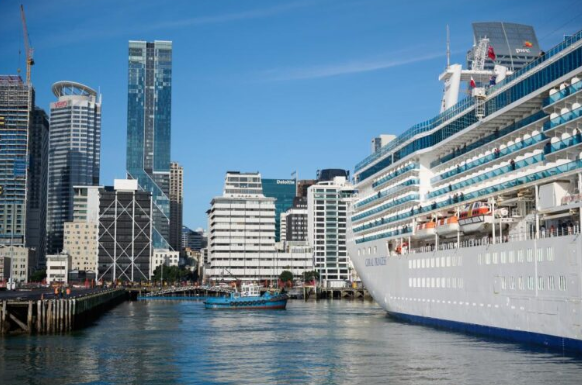
The innovation is projected to have an important role in maritime operations, as vessels with problematic areas have traditionally required offshore cleaning, far from port facilities. The new approach to spot or niche area cleaning, required by national regulators, is the result of collaboration between the Port of Auckland and New Zealand Diving and Salvage Limited (NZDS).
According to disclosures, once approved, the prototype will be deployed during the upcoming summer season before cruise activities reach peak levels. Although technical details remain confidential, the final solution has reportedly been fully engineered and cleared as a biosecurity treatment. Alongside this, the port and NZDS will continue engaging with partners to secure regulatory approval for a commercial-grade version of the device.
Commenting on the development, Chris Mills, GM Marine, Multi-Cargo and Cruise at the Port of Auckland, said: “The prototype represented an additional service for maritime stakeholders in the rare instances where there is a need for spot cleaning.” He added that the service is intended to satisfy all requirements set by regulators for biofouling management.
Biofouling, defined as the accumulation of microorganisms, algae, plants, and animals on submerged ship surfaces, is widely recognized as a factor affecting fuel efficiency and emissions. With the maritime industry working toward net-zero targets, addressing biofouling is seen as a critical challenge.
Research underlines the significance of timely cleaning. A June 2023 study by Jotun, a Norway-based marine coatings manufacturer, found that nearly two-thirds (59%) of the shipping sector underestimates the ecological effects of biofouling, and about one in four respondents admitted limited knowledge of the issue. The report suggested that clean hulls could reduce carbon dioxide emissions by up to 20% and cut fuel costs by 19%.
Further findings were highlighted in a January 2025 study by researchers at KTH Royal Institute of Technology in Sweden. The report stressed the importance of cleaning schedules, noting that slime fouling alone can increase fluid friction at sea and raise shaft power demand by up to 18%. According to researcher Cornelius Wittig, even a thin biofilm can raise a vessel’s fuel consumption by as much as 80% if it is not detected and addressed promptly.
By progressing this in-port cleaning solution, the Port of Auckland and NZDS aim to provide shipping and cruise stakeholders with a practical service to meet biosecurity obligations, improve efficiency, and contribute to emission reduction.
