Now in its fifth edition, the CPPI highlights wide differences in resilience across regions. North America and Europe regained stability by 2024, maintaining efficiency despite continuing challenges. South Asia was the only region to surpass pre-pandemic 2020 levels in 2023, although Red Sea tensions weighed on results in the following year. The Middle East and North Africa began with solid improvements but were later affected by crisis fallout. Sub-Saharan Africa continues to struggle with weaker inland connections and limited automation, with major ports such as Durban and Cape Town experiencing longer waiting times in 2024.
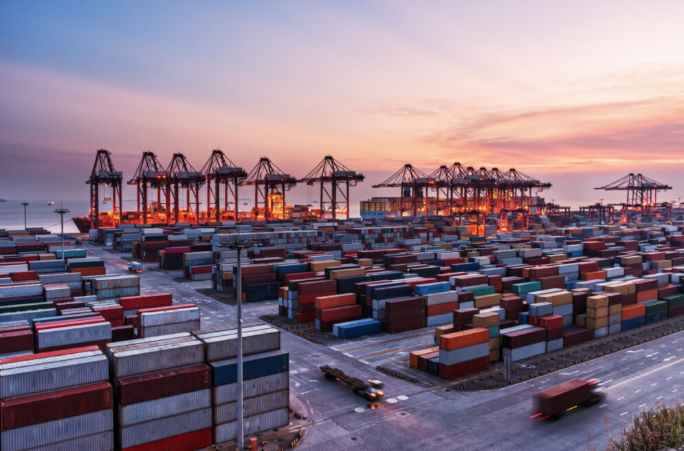
China’s Yangshan ranked first globally with a score of 146.3, followed closely by Fuzhou and Port Said in Egypt. Tanger-Med in Morocco, Cai Mep in Vietnam, and Hamad Port in Qatar also performed strongly. Latin America saw Posorja in Ecuador emerge as its highest-ranked port, while India’s Jawaharlal Nehru Port nearly doubled its CPPI score since 2020, supported by capacity expansions and improved trade processes. Cape Town in South Africa recorded one of the sharpest year-on-year rebounds, though from a lower base.
Nicolas Peltier-Thiberge, Global Director for Transport at the World Bank, stated: “Even amid the multiple shocks, developing country ports are finding ways to adapt, improve, and maximise value. It’s a reminder that with better planning, technology, and cooperation across the logistics chain, ports can make significant strides in their efficiency.”
The 2024 CPPI provides a benchmark for 403 container ports worldwide, drawing on data from more than 175,000 vessel calls and 247 million container moves. Its core measure is total vessel time in port, which offers insight into the resilience and reliability of global trade systems.
For the first time, the index includes a multi-year trend analysis covering five years of disruption, showing how ports have responded and adapted. The report highlights that 24/7 crane operations, efficient crane deployment, and digital platforms linking customs and logistics partners can meaningfully improve competitiveness.
Turloch Mooney, Global Head of Port Intelligence & Analytics at S&P Global Market Intelligence, commented: “The CPPI, and its underlying data, serves as a diagnostic tool, enabling stakeholders to pinpoint structural inefficiencies and develop strategies for enhancing port operations. As we navigate an increasingly complex global shipping environment, understanding and improving port performance is essential for economic growth and competitiveness.”
The findings underline both challenges and opportunities for ports worldwide, with top performers setting benchmarks for efficiency while others continue to focus on infrastructure and system upgrades.