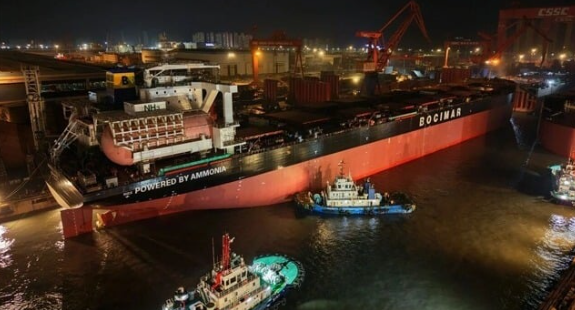
Chinese shipyard has floated the first large, ammonia-fueled dry bulk carriers
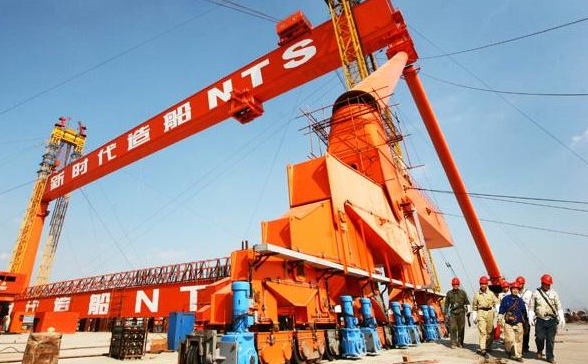
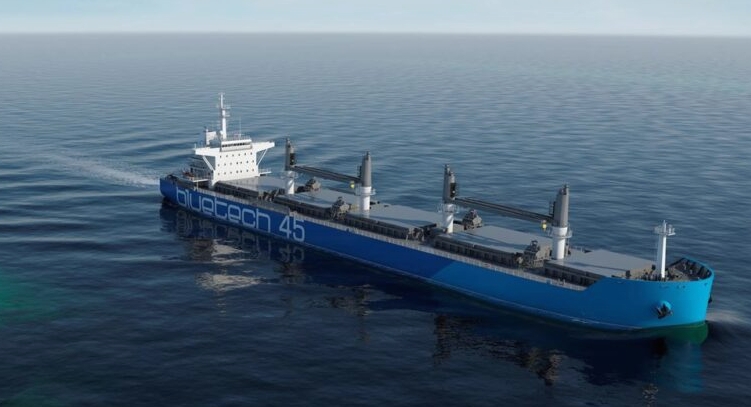
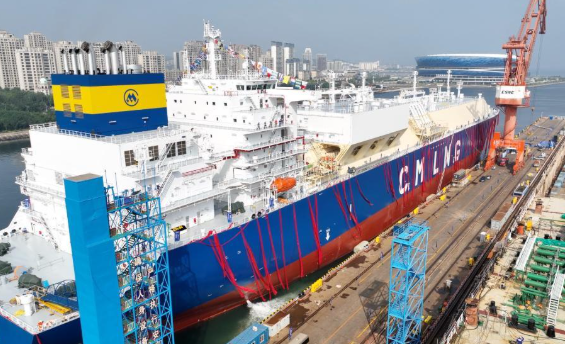
Beihai Shipyard recently floated out the first two Newcastlemax bulk carriers, each measuring 300 meters in length and designed for 210,000 deadweight tons (dwt). These ships are part of a fleet of 10 ammonia-fueled Newcastlemax vessels ordered by CMB.TECH, in addition to eight ammonia-ready bulkers that can be converted to ammonia propulsion in the future.
CMB.TECH first announced its ammonia-fueled ship project in 2023, aiming to promote the use of ammonia as an alternative marine fuel. The company partnered with WinGD to co-develop the X72DF two-stroke engine, capable of operating on ammonia. Progress has been steady, with WinGD’s first 52-bore ammonia engine installed in August 2025 on a gas carrier newbuild at HD Hyundai in South Korea. Development work on the larger 72-bore model is also advancing.
According to Beihai, before floating out the two bulkers, workers installed four main engines and one auxiliary boiler on each vessel. The shipyard plans to conduct testing on both ships simultaneously to shorten the overall construction timeline.
CMB.TECH has also entered a joint ownership agreement with Japan’s Mitsui O.S.K. Lines (MOL) for three ammonia-fueled bulk carriers, scheduled for delivery in 2026 and 2027. MOL will charter the vessels for 12 years. Separately, CMB.TECH has signed a charter agreement with Fortescue for another ammonia-powered ore carrier, which is expected to be delivered by late 2026. This vessel will operate on routes transporting ore from Australia’s Pilbara region to customers in China and other global markets.
CSSC reported that Beihai Shipyard is overcoming operational challenges and accelerating its construction schedule. After floating out the first two ammonia-fueled bulkers, the yard laid the bottom blocks for two additional Newcastlemax vessels, which belong to the ammonia-ready portion of CMB.TECH’s order. Work has also commenced on another large ore carrier for the company.
According to DNV’s Alternative Fuels Insights database, there are currently only three ammonia-fueled ships in operation worldwide, including an offshore support vessel converted by Fortescue and a tug converted by NYK. DNV projects that both the Exmar gas carrier under construction in South Korea and the first CMB.TECH bulker will be delivered within 2025. Deliveries of ammonia-fueled ships are expected to accelerate, with 22 scheduled for 2026 and 39 in total to be delivered by 2029.
The completion of these projects marks a significant advancement in the maritime industry’s transition toward low-carbon fuels, with China’s shipbuilding sector playing a key role in driving the global adoption of ammonia-powered vessels.