


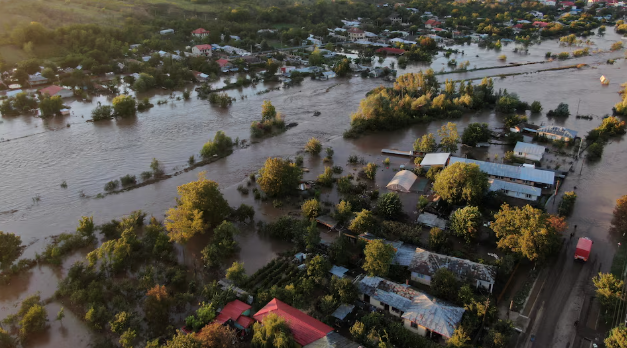
A drone view shows a flooded area, after heavy rain triggered flooding in Slobozia Conachi, Galati country, Romania, September 14, 2024.
Under Romania’s reform plan agreed with the European Commission, the country must set up a financing mechanism for flood protection projects by the first quarter of 2026. The fund will focus on long-term infrastructure resilience and is expected to operate for at least five years. According to Buzoianu, its structure will be based on a World Bank study estimating that Romania requires between 10 billion and 40 billion euros ($11.66 billion–$46.65 billion) to rehabilitate dams, strengthen river defences, build new bridges, and carry out other essential works.
Buzoianu acknowledged the government’s financial constraints, noting that the coalition administration is working to reduce one of the largest budget deficits in the EU. “At the moment we cannot cover absolutely all the ideal necessary works,” she said in an interview with Reuters. “But what I want is for this fund to cover works in areas where we already know we have high risk of flooding without which communities and lives are endangered.”
The total value of the fund will be determined by the government, with financing sourced from water management fees and related taxes. Funds will be directed toward priority projects identified in the World Bank study, focusing on communities facing the greatest flood risks.
The environment ministry has already lost access to 2 billion euros ($2.33 billion) in EU recovery funds because of delays that made it impossible to complete certain projects before the August 2026 deadline. Buzoianu, who assumed office in late June, is now implementing reforms in forestry and water management agencies to meet EU targets and secure the remaining recovery funds. She said that about 40% of the lost funding will be compensated through allocations from the state budget.
The new fund is intended to strengthen Romania’s capacity to respond to increasingly frequent extreme weather events and reduce the risk of economic and social losses caused by floods. It will prioritize infrastructure projects that safeguard vulnerable communities and maintain compliance with European commitments.
By launching this mechanism, Romania seeks to enhance its long-term flood resilience while restoring access to EU financing critical to environmental and infrastructure development. The initiative also marks an important step in aligning national disaster management strategies with broader European environmental and sustainability objectives.
