


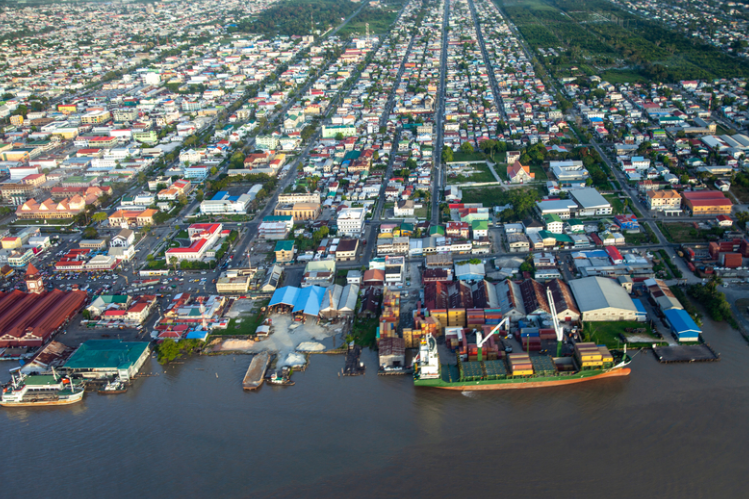
An aerial picture of Guyanese capital Georgetown from the river embankment
More than 60 percent of the nation's roads are secondary routes located on low coastal plains susceptible to sea level rise, heavy rainfall, and severe weather events. The funding will support enhancements including improved drainage systems, slope reinforcement, separate paths for pedestrians and cyclists, safety barriers, and elevated embankments to combat erosion.
Under the Integrated Transport Corridors Project, the initiative seeks to strengthen access to educational and medical facilities, boost economic activity, and decrease regional isolation.
Flooding in 2021 resulted in $100 million in losses to Guyana's agriculture and transportation sectors.
The country's road fatality rate stands at 15 deaths per 100,000 people, compared to 14 in India (2021) and 5 in Italy, based on World Health Organisation data.
Diletta Doretti, Guyana’s representative at the World Bank Group, said: “Guyana’s rapid economic expansion places increasing pressure on infrastructure, while the growing risks from natural hazards, such as flooding and storms, further challenge the country’s systems. This project will help Guyana’s road network keep pace with its growth by making it safer and more resilient.”
Dr. Ashni Singh, Guyana’s minister of finance, said: “This project has the potential to help unlock increased production and productivity in our non-oil economy, such as through farm to market roads which facilitate both production and trade, as well as to improve connectivity between communities.”
Financing comes via the World Bank’s International Development Association, focused on supporting lower-income nations.
This investment addresses critical vulnerabilities in Guyana's transport network, where coastal topography amplifies climate-related risks. By prioritizing resilient design, the project ensures continued functionality during adverse conditions, safeguarding supply chains and daily mobility.
Targeted upgrades will incorporate durable materials and engineering standards proven in similar environments, extending asset lifespan and reducing maintenance costs over time. Dedicated non-motorized lanes promote inclusive access, encouraging safer travel options for vulnerable users.
The emphasis on farm-to-market connections directly supports agricultural output, enabling timely delivery of produce and inputs. Enhanced corridors will also facilitate workforce movement, linking rural areas to urban centers and opportunities.
Guyana's economic trajectory, driven by diverse sectors, demands robust infrastructure to sustain progress. The loan's concessional terms reflect international recognition of the country's development priorities and exposure to environmental challenges.
Implementation will follow phased timelines, with monitoring frameworks to track performance indicators like reduced flood downtime and improved travel times. Community engagement ensures local needs inform design, maximizing benefits across demographics.
Safety interventions, including barriers and signage, aim to lower the current mortality rate through evidence-based measures. Comparative global benchmarks highlight the urgency of these actions in achieving regional standards.
Overall, the project exemplifies strategic financing for adaptive infrastructure, blending immediate rehabilitation with long-term climate resilience. By fortifying key arteries, Guyana positions itself for balanced growth, where connectivity underpins social and economic advancement in a changing environment.
