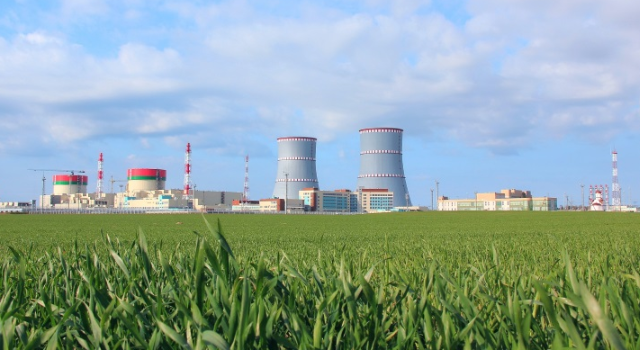
The Belarusian nuclear power plant, built at Ostrovets
According to the information published on the President’s website, Lukashenko noted that the population of Ostrovets has nearly doubled to about 15,000 people, supported by new employment opportunities. He said many graduates from energy faculties seek positions at the plant. Lukashenko highlighted the advantages of building a third unit at the current site, stating that the location already has regulatory approval, a trained workforce, and developed social infrastructure. He said: “The ground conditions there have already been thoroughly studied. There is no need for any additional surveys.”
Lukashenko added that constructing a new plant in the eastern region would require more investment, but it could bring long-term benefits by supporting economic development. He said such a project could “transform the eastern region from a backwater into a highly developed territory of Belarus. This means new jobs, investment, innovative projects, and new technologies.”
Vice Premier Viktor Karankevich said that alongside advancing the third unit at Ostrovets, the government will survey sites in Mogilev Oblast to assess their suitability for future capacity additions, depending on energy demand. The meeting also reviewed the performance of the existing nuclear facility, five years after the first unit began operation.
Lukashenko said: “The construction of the nuclear power plant not only strengthened our energy security, but also determined the further development of Belarus as a high-tech state ... we have provided ourselves with a source of affordable, environmentally friendly energy for decades to come, and have achieved an economic and environmental effect.” He also emphasized ongoing electrification in heating and transportation. Survey data shows domestic public support for nuclear energy has increased from around 60% before the plant was built to more than 80% today.
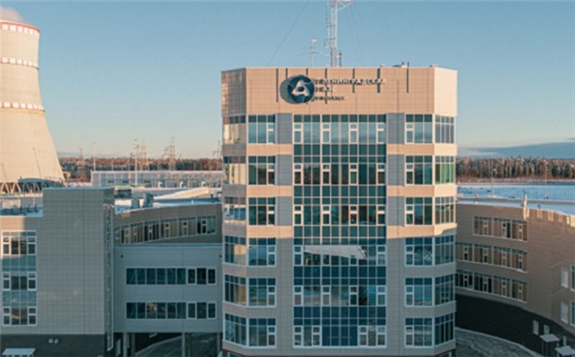
The Belarus nuclear power plant contains two VVER-1200 reactors and is located in Ostrovets in the Grodno region. The general construction contract with Russia’s Rosatom was signed in 2011. Construction of Unit 1 began in November 2013, and Unit 2 in May 2014. Unit 1 was connected to the grid in November 2020, and Unit 2 entered commercial operation in November 2023. Nuclear power now supplies more than one-quarter of the country’s electricity.
Rosatom said its Director General Alexey Likhachev met on Thursday with Belarusian Prime Minister Alexander Turchin, during which “the two sides discussed in detail possible options for the further development of Belarus’s nuclear energy sector.”