Air conditioners Kota Bharu Malaysia. Credit: Andrew Woodley/Education Images/Universal Images Group via Getty Images
Emissions of the vast majority of CFCs have steadily declined since countries phased out production and use of the pollutants in 2010 under an international environmental treaty known as the Montreal Protocol. However, emissions of a subset of five CFCs have risen since the ban took effect, according to the study, published Monday in the journal Nature Geoscience.
The study did not determine the source of emissions, but suggested that manufacturing of hydrofluorocarbons (HFCs), chemical refrigerants that replaced CFCs and other ozone depleting chemicals, may be to blame, because at least some of the CFCs detected in the atmosphere are permitted byproducts in the manufacture of HFCs, which are produced primarily in China and the United States.
At current levels, the increasing CFC emissions will have little impact on the ongoing recovery of the atmospheric ozone layer, which protects the planet from harmful ultraviolet radiation. The ozone hole over Antarctica is on track to be fully restored by 2066.
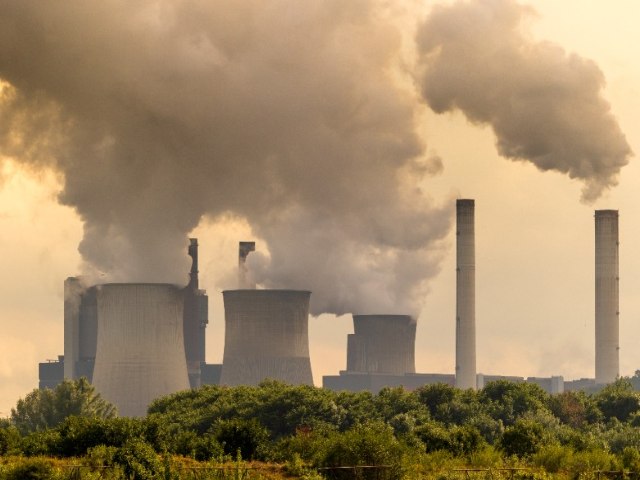
However, the chemicals’ climate impact may be of greater concern. Emissions of the five chemicals–CFC-13, CFC-112a, CFC-113a, CFC-114a and CFC-115—equaled 47 million metric tons of carbon dioxide emissions in 2020 alone, according to the study. That is equal to the annual greenhouse gas emissions from 10 million cars or 13 coal-fired power plants, according to the EPA’s greenhouse gas equivalency calculator.
“Any delay to Antarctic ozone hole recovery will only be very small, but they are still quite potent greenhouse gases,” said the study’s lead author, Luke Western, a researcher at the University of Bristol in the United Kingdom and the National Oceanic and Atmospheric Administration in the U.S.
The five CFCs that were monitored in the current study are thousands of times more effective at warming the atmosphere than carbon dioxide on a pound for pound basis. However, their atmospheric concentrations are quite low compared to CO2, the primary driver of climate change.
Total annual emissions for all CFCs are down by approximately 95 percent from their peak in the late 1980s, when countries first began a mandatory phase out of their production and use under the Montreal Protocol, Western said.
If the sources of ongoing CFC emissions can be found and eliminated, it could have a significant impact on greenhouse gas emissions reductions in the near term while countries continue to work on the larger challenge of reducing emissions of carbon dioxide and other greenhouse gases, Western said.
“It has the potential to be an easy win,” he said.
Three of the five pollutants—CFC-113a, CFC-114a and CFC-115—are unwanted byproducts formed during the production of HFC-125, and “may account for at least some of the observed emissions,” Western and colleagues wrote in the study. HFC-125 is one of two ingredients in R-410A, a widely used chemical refrigerant for air conditioners.
While production and use of CFCs are banned under the Montreal Protocol, their creation is allowed if they are unwanted by-products in the manufacturing of other chemicals. CFCs can be eliminated through incineration, but such pollution control measures are not required under the Montreal Protocol, which grants exemptions for their required elimination in the case of byproduct emissions.
Previous studies have identified “eastern China or the Korean Peninsula” as a source of emissions for two of the five pollutants, CFC-113a and CFC-115, and noted that eastern China is a leading producer of HFC-125. Production of HFC-134a, another chemical commonly used as a refrigerant and produced in large quantities in China, may also be a source of CFC emissions according to the current study.
“It makes sense that we link some of these things to China,” Western said. “China is a huge chemical producer.”
Western added, however, that HFC production in China is “not enough to explain the entire global picture.”
A chemical plant owned by chemical manufacturer Honeywell in Geismar, Louisiana, is likely the largest producer of HFC-125 outside of China. In 2003, Honeywell announced the opening of a $100 million chemical plant that, at the time, was the “largest production facility of HFC-125 in the world.”
The plant’s HFC-125 production capacity when it opened was 20,000 metric tons per year, according to a 2002 report prepared for the World Bank. The U.S. International Trade Commission confirmed that, as of 2021, Honeywell continued to produce HFC-125 and was the sole U.S. producer of the chemical. “The R‐125 equipment at its Geismar, Louisiana, plant cannot be used to produce other [chemical] components,” the commission said.
The study noted that an estimated 205,000 metric tons of HFC-125 was produced globally in 2020. If Honeywell’s Geismar plant is producing at full capacity, its annual production would account for approximately 10 percent of global HFC-125 production.
Honeywell did not respond to multiple requests from Inside Climate News for information about its HFC-125 production and any potential CFC emissions from its Geismar plant. The company does report the use of “thermal oxidizers” to destroy fluorinated gases at its Geismar facility, but it is not clear if the pollution controls are used to destroy any of the CFCs mentioned in the current study, and, if so, the extent to which those chemicals are eliminated.
Federal regulations do not require chemical producers to destroy unwanted byproduct CFC emissions. The EPA’s Greenhouse Gas Reporting Program, which provides detailed emissions data on a wide number of the gases, does not note the release of any CFCs from Honeywell’s Geismar plant. The agency did not immediately respond to questions about whether they require companies to report CFC emissions and, if not, why CFCs are not included in their greenhouse gas reporting requirements.
Any CFC emissions from HFC production in the U.S. should begin to decline sometime over the next decade. The U.S. and other developed countries must reduce HFC production and use by 85 percent by 2036 under a recent update to the Montreal Protocol. China and other developing countries are required to reduce HFCs by 80 percent by 2045.
But before HFC production decreases, it will likely continue to increase, Western said. “For the next decade, we’ll likely still see an increase in production of HFCs or many HFCs at least,” he said.
Stephen Andersen, director of research at the Institute for Governance and Sustainable Development, said that countries should accelerate the phase down of HFCs as the chemicals are potent greenhouse gases in their own right and their breakdown can result in the formation of “forever chemicals.” At the same time, Andersen said the Montreal Protocol should tighten or eliminate current exemptions for things like CFC emissions from HFC production.
As a party to the Montreal Protocol, the U.S. government could play a key role in eliminating remaining exemptions for CFC emissions, Andersen said.
“Everyone knows how to do this,” Andersen said. “They’re just not motivated enough to do it.”