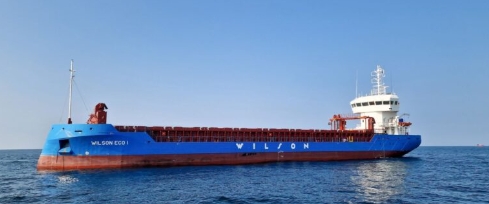
Designed by Dutch firm Conoship International, Wilson ECO I follows the CIP3800 blueprint, prioritizing energy efficiency, operational versatility, and reduced environmental impact. The vessel features diesel-electric propulsion and is equipped for a wind-assisted system, achieving an Energy Efficiency Design Index (EEDI) score 30% below the International Maritime Organization’s 2025 requirements. This results in notable reductions in greenhouse gas emissions per unit of cargo transported.
Wilson ASA ordered the first six ECO series vessels in June 2023 and confirmed an additional eight diesel-electric ships in the summer of 2024. The company also plans to build eight 6,300 dwt vessels, designed for efficiency and environmental benefits, with deliveries expected by 2028.
In a related development, Wilson ASA retrofitted its 2012-built bulk carrier, Wilson Eyde, with wind-assisted propulsion to support its sustainability goals. The ship, equipped with VentoFoils from Econowind—vertical wings that harness wind for forward thrust—began operations for Norwegian aluminum producer Hydro. The retrofitted vessel made its first call at Hydro’s Årdal facility on April 14, 2025, and now operates on a regular schedule.
Wilson’s initiatives reflect its commitment to delivering energy-efficient solutions for its clients. The company stated: “The retrofit of Wilson Eyde and the introduction of the ECO series are key steps toward reducing emissions and enhancing the sustainability of our operations.” These efforts align with growing industry demand for environmentally responsible shipping solutions.
The ECO series and retrofitting projects demonstrate Wilson ASA’s focus on integrating innovative technologies to improve efficiency and reduce the environmental footprint of its fleet. By combining advanced ship design with renewable energy solutions, the company aims to meet the evolving needs of its customers while contributing to a more sustainable maritime industry.