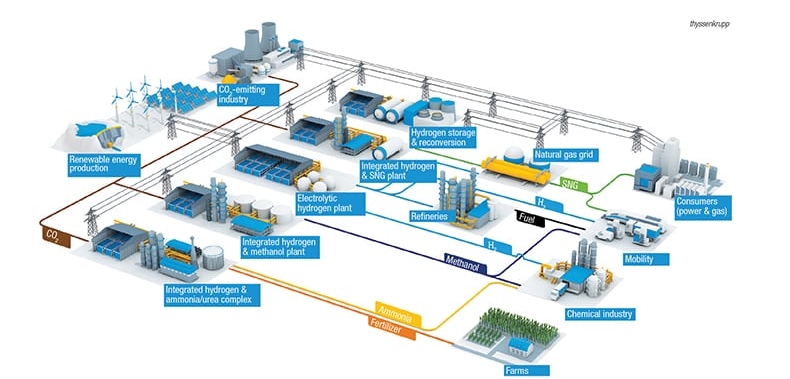
Unlike traditional grey methanol derived from natural gas, the e-methanol will be produced through direct hydrogenation of CO2, utilizing Thyssenkrupp Uhde’s green methanol technology. This process combines green hydrogen, generated from a 200MW water electrolysis plant powered by renewable electricity, with CO2 captured from a waste incineration facility in Vaasa, Finland. The captured CO2 will be liquefied and transported by trucks to the P2X site, resulting in a significantly reduced carbon footprint for the e-methanol.
Nadja Håkansson, CEO of Thyssenkrupp Uhde, stated: “We are proud that our technology and implementation know-how will contribute to this pioneering project by Koppö Energia Oy. This is an excellent proof point for cross-industrial cooperation in the establishment of green methanol as a fuel.”
The Uhde green methanol technology is noted for its high carbon and hydrogen efficiencies, which enhance the project’s economic viability. The patented process minimizes purge gas, further reducing the facility’s carbon intensity. This efficiency supports the production of sustainable fuel, aligning with growing demand for environmentally friendly energy solutions in the maritime and transportation sectors.
Thomas Zirngibl, Director at Koppö Energia, said: “We are very pleased to cooperate with Thyssenkrupp Uhde on this project as they bring the right technologies as well as the integration skills for ensuring a smooth tie-in and project delivery.”
The collaboration between Thyssenkrupp Uhde and Koppö Energia highlights the potential for innovative partnerships to advance sustainable fuel production. The Kristinestad plant is expected to play a key role in supplying green methanol, supporting Finland’s efforts to transition to cleaner energy sources. By leveraging renewable hydrogen and captured CO2, the project demonstrates a practical approach to reducing emissions in fuel production.
This initiative reflects a broader trend toward sustainable industrial processes, with the e-methanol plant poised to contribute to the global shift toward low-carbon fuels. The successful implementation of the FEED phase will pave the way for the construction and operation of the facility, strengthening the region’s renewable energy infrastructure.