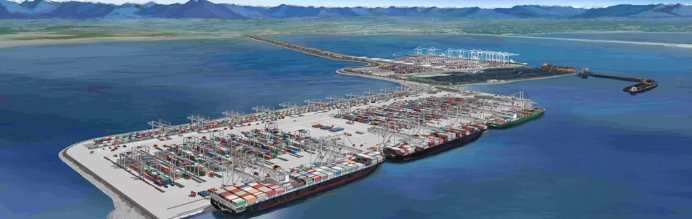
If it goes ahead, the new terminal at the Port of Vancouver will be attached to the existing Roberts Bank Terminal, itself an artificial island built in 1970 in the Strait of Georgia
The new terminal will connect to the existing Roberts Bank Terminal, an artificial island constructed in 1970. Terminal 2 is expected to increase the Port of Vancouver’s container-handling capacity by 30%, facilitating C$100 billion in annual goods movement and contributing C$3 billion to British Columbia’s GDP. The project will generate 18,000 construction jobs and 17,000 permanent jobs once operational.
The authority seeks a partner with extensive experience in large-scale marine infrastructure projects and expertise in technical and regulatory matters, including collaboration with First Nations. The scope includes constructing the artificial island and wharf, widening the causeway to accommodate additional rail tracks, and expanding the tug basin.
The project will adopt a “progressive design-build” approach, which the authority believes fosters collaboration, design flexibility, and reliable cost and schedule outcomes. Three candidates will be shortlisted to submit proposals for a design and early works agreement, informing the final investment decision. The selected partner will work with the port authority, First Nations, and regulators to finalize logistics, costs, and schedules. Upon approval, a target-price design-build contract will initiate construction.
The C$3.5 billion project has faced environmental concerns regarding its impact on Chinook salmon habitats, critical for southern resident killer whales. A coalition of conservation groups challenged the project in Federal Court, citing violations of Canada’s Species At Risk Act, but the case was dismissed in January 2025. The port authority submitted a Fisheries Act Authorisation application, compliant with environmental regulations, to Fisheries and Oceans Canada in 2024, with a decision expected by October 2026.
The Roberts Bank Terminal 2 Project aims to enhance the Port of Vancouver’s capacity to handle global trade, supporting exports and imports while boosting local economic growth through job creation and infrastructure development.