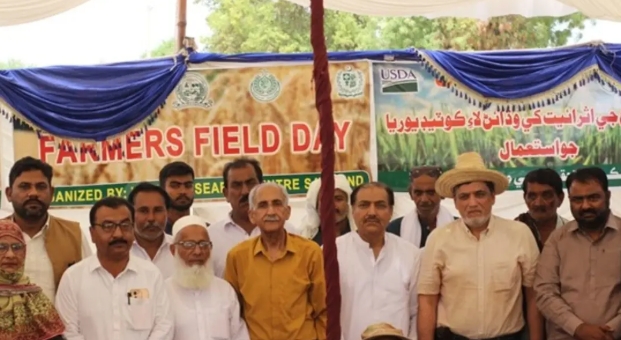
The field days drew over 1,230 participants, including farmers, agricultural professionals, fertilizer company representatives, and local NGO members. Attendees observed field trials where ICARDA scientists, alongside National Agricultural Research System (NARS) partners, showcased innovative fertilizer techniques compared to traditional methods. Representatives from institutions such as Quaid-e-Awam Agriculture Research Institute, Wheat Research Centre, Soil Fertility Research Institute, University of Agriculture Faisalabad, Soil and Water Conservation Research Institute, Land Resources Research Institute, and Forman Christian College University demonstrated technologies like Green Seeker for need-based nitrogen application, coated fertilizers, and Biozote biofertilizer. These innovations aim to enhance wheat yields while promoting environmental sustainability.
Dr. Imtiaz Muhammad, ICARDA Coordinator for Pakistan, outlined the "Fertilize Right" project’s goals: “The project emphasizes international collaboration to introduce and scale innovative agricultural technologies.” He commended NARS partners for their role in researching and promoting smart fertilizer practices that reduce costs, boost yields, and lower greenhouse gas emissions.
Dr. Aslam, ICARDA’s Soil Fertility and Health Consultant, addressed farmers’ and extension agents’ questions, emphasizing the 4Rs of fertilizer use: right type, right amount, right place, and right time, to ensure sustainable practices. Ms. Sameerah Yunis, ICARDA’s Gender and Community Specialist, highlighted women’s contributions to the project: “Their inclusion in decision-making leads to smarter, more cost-effective fertilizer use.”
Participants gained practical experience with techniques like biofertilizer seed treatment and coating urea with neem oil and compost, which improve crop productivity, minimize fertilizer losses, and protect the environment. ICARDA, in partnership with national and international organizations, remains committed to delivering science-based solutions to address modern agricultural challenges and climate change impacts in Pakistan.