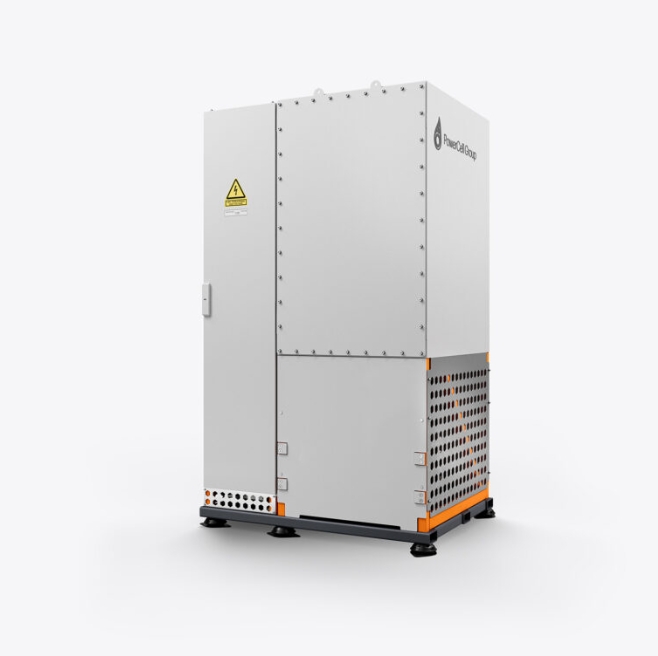
The compact and modular design of the Marine System 225 supports shipowners in meeting global decarbonization goals, such as the International Maritime Organization’s greenhouse gas strategy and the European Union’s ‘Fit for 55’ initiative. With this certification, the system is now approved for use across various vessel types, enabling operators to adopt hydrogen-based electric technology.
Lisa Kylhammar, SVP Engineering at PowerCell Group, said: “This Type Approval is not just a technical milestone, it’s a clear signal to the maritime industry that hydrogen fuel cell systems are safe, viable, and ready for commercial deployment, it simplifies the path to zero-emission vessel design and accelerates the transition to sustainable shipping.”
Claudene Sharp-Patel, Global Technical Director at Lloyd’s Register, added: “The maritime industry is undergoing a profound transformation with dynamic changes, and technologies like hydrogen fuel cells will play a crucial role in shaping its sustainable future. Granting type approval to PowerCell’s Marine System 225 demonstrates that the system meets our stringent safety and performance standards and is ready for integration into commercial marine applications. We are pleased to support this advancement in zero-emission propulsion.”
In related developments for 2025, PowerCell secured an order for its M2Power 250 system from a European shipyard, marking the first commercial sale of its methanol-to-power technology, launched in the third quarter of 2024. Valued at SEK 150 million (approximately $14.85 million), the order involves a 2 MW installation of M2Power 250 systems, which convert methanol into clean electricity for a vessel’s internal systems.
The delivery of this methanol-based solution is scheduled for 2029, with the contract encompassing engineering services and product supply. This milestone underscores PowerCell’s role in advancing sustainable marine propulsion technologies.