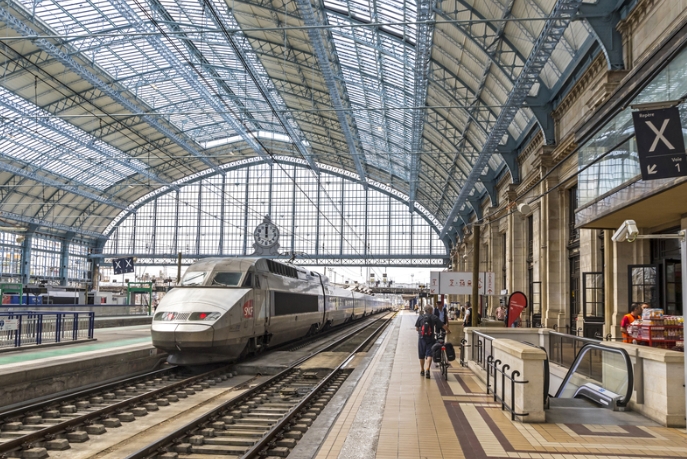
An SNCF train arriving at Bordeaux-Saint-Jean station
The €14 billion first phase of the GPSO builds on the Tours-Bordeaux high-speed route, operational since 2017. Scheduled for completion by 2032, the project will significantly reduce travel times across the Occitanie and Nouvelle-Aquitaine regions. It will shorten the Paris-to-Toulouse journey from 4 hours 10 minutes by an hour and cut nearly an hour from the 2-hour-1-minute trip between Bordeaux and Toulouse. A future phase will extend the line into Spain’s Catalonia and Basque regions, reducing the Bordeaux-to-Barcelona travel time by an hour from its current 4 hours 50 minutes.
Systra’s role involves serving as the general and technical project management assistant for SNCF, the French state rail operator. The prefect of the Occitanie region, coordinating the project, stated: “The GPSO has been declared a public utility project.” Funding for the first phase is shared, with the French State and 25 local authorities in Occitanie and Nouvelle-Aquitaine each covering 40% of the €14 billion cost, while the European Union contributes the remaining 20%.
The project aligns with the growing population needs in southwest France and aims to improve regional and cross-border connectivity. Systra emphasized: “The GPSO will cut travel times between the major cities in France’s southwest amid population growth in the Occitanie and Nouvelle-Aquitaine regions.”
This announcement follows an unrelated incident in July 2024, when France’s high-speed rail network faced a coordinated sabotage attempt before the Olympics opening ceremony. The GPSO remains a priority for enhancing sustainable transport infrastructure in the region.