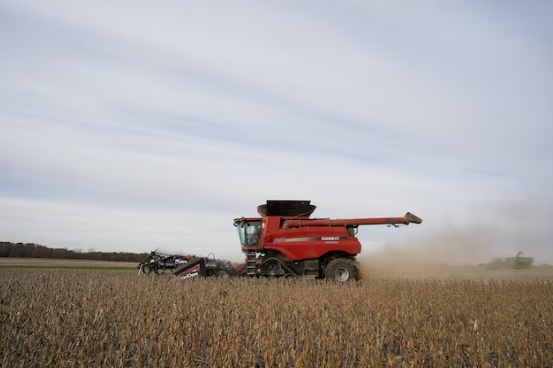
Soybeans are harvested from a field on Hodgen Farm in Roachdale, Indiana, U.S. November 8, 2019.
According to the USDA’s monthly supply-and-demand report, biofuel producers are expected to consume a record 15.5 billion pounds of soybean oil in the 2025/26 marketing year. This forecast reflects an 11.5% increase from the previous month’s estimate and a 26.5% rise compared to the current marketing year. The surge in domestic demand is anticipated to reduce U.S. soybean oil exports to 700 million pounds in 2025/26, down significantly from 2.6 billion pounds in the current season.
In June 2025, the U.S. Environmental Protection Agency (EPA) proposed higher biofuel blending requirements for oil refiners for 2026 and 2027, with a focus on biomass-based diesel. The EPA also introduced measures to limit the use of imported biofuels and feedstocks. These changes have been well-received by the U.S. biofuel industry, which has faced uncertainty in recent months. The policies aim to support the production of fuels made from domestic feedstocks such as soybean oil, canola oil, and used cooking oil.
Under the Renewable Fuel Standard, refiners must blend significant volumes of biofuels into the U.S. fuel supply or purchase Renewable Identification Numbers (RINs) from producers who do. The USDA noted: “EPA not only significantly raised the mandates but also proposed to reduce the number of Renewable Identification Numbers (RINs) generated for imported renewable fuels and renewable fuels produced from foreign feedstocks starting in 2026, which increases demand for domestically produced feedstocks like soybean oil.”
Additional support for the biofuel sector comes from state-level biofuel mandates and the federal 45Z clean fuel production tax credit, included in recent legislation. These incentives have strengthened the outlook for soybean oil use in biofuel production. On July 11, 2025, Chicago Board of Trade soybean oil futures rose, approaching a 7.5-month high recorded on June 23, 2025, reflecting market confidence in the growing demand.
The policy shifts are expected to bolster the U.S. biofuel industry while supporting domestic agricultural markets, particularly for soybean producers, by prioritizing locally sourced feedstocks.