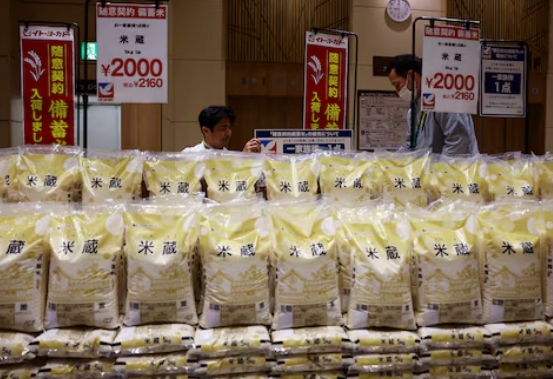
Rice displayed at Ito-Yokado grocery store, a subsidiary of Seven & i Holdings, in Tokyo, Japan May 31, 2025.
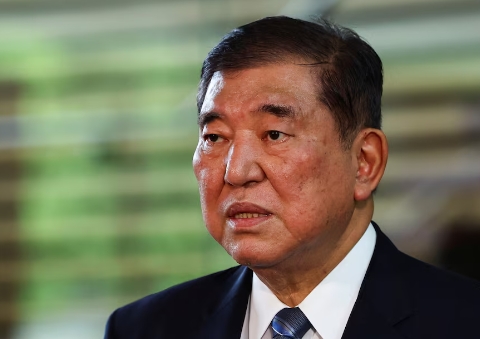
The trade deal, announced on July 22, 2025, in Washington, includes a reduction in reciprocal tariffs from a proposed 25% to 15%. The agreement facilitates greater shipments of U.S. rice to Japan, alongside other products such as cars, trucks, and additional agricultural goods. However, specific details about other farm products included in the deal were not disclosed. Ishiba emphasized that the agreement does not involve lowering tariffs beyond the tariff-free quota. “We made absolutely no sacrifice in the agricultural sector,” Ishiba told reporters, highlighting Japan’s commitment to protecting its domestic agriculture. “Import volumes will remain within the minimum access framework and we retain the discretion over how much and what type (of rice) to import from each country,” he added.
Under the WTO’s “minimum access” framework, established in 1995, Japan imports approximately 770,000 metric tons of rice annually without tariffs. In the last fiscal year, the United States supplied 45% of this total. Outside this quota, Japan imposes a levy of 341 yen ($2.36) per kilogram on rice imports, which has generally limited additional imports due to the country’s strong domestic rice production. However, over the past year, Japan has imported higher-than-usual volumes of rice due to a domestic shortage and rising prices of locally grown rice.
The trade agreement reflects a balance between expanding market access for U.S. producers and maintaining Japan’s agricultural protections. U.S. President Donald Trump, announcing the deal, noted that it would enhance opportunities for American producers in Japan’s market. The agreement ensures that increased rice imports remain within the established WTO framework, preserving Japan’s control over import volumes and types. This development addresses short-term domestic supply challenges in Japan while strengthening trade ties with the United States, without altering the tariff structure for rice beyond the agreed quota.