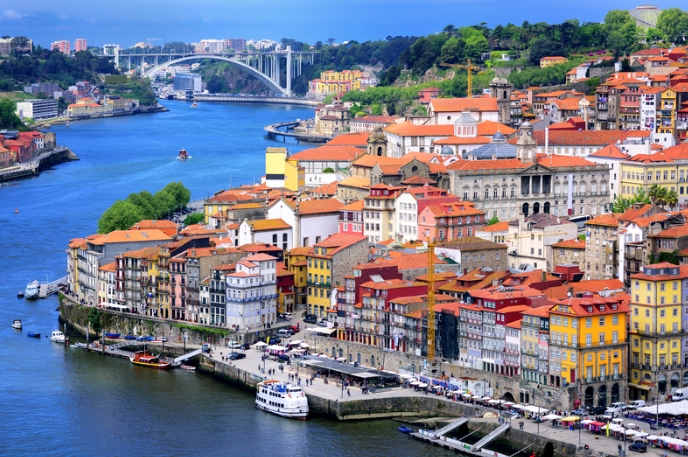
IP also signed a 30-year concession agreement with the Avan Norte consortium, comprising Portuguese companies Mota-Engil, Teixeira Duarte, Casais Group, Alves Ribeiro, Conduril Engenharia, and Gabriel Couto. The consortium is tasked with designing, building, and maintaining the Porto-Oiã section. Key tasks include constructing a new bridge over the Douro River, developing an underground station at Santo Ovídio in Vila Nova de Gaia, and upgrading Porto’s Campanhã station to support high-speed services and improve connectivity with other transport modes.
Once completed, the full Lisbon-Porto high-speed line will reduce travel time between the two cities from three hours to one hour and 15 minutes, with the capacity to serve 10 million passengers annually. The EIB committed €3 billion last year to fund the entire project, highlighting its significance for Portugal’s infrastructure development.
Portugal’s Infrastructure and Housing Minister, Miguel Pinto Luz, stated: “The country’s first high-speed railway and the new Lisbon Airport were the largest projects that the country will undertake this century and are critical factors for Portugal’s economic growth.” The project aims to enhance connectivity and stimulate economic activity across the region.
Jean-Christophe Laloux, EIB’s Director General of Financing, remarked: “The new high-speed line will support sustainable mobility, strengthen territorial cohesion and contribute to the climate transition.” The initiative aligns with efforts to promote environmentally friendly transport solutions and regional integration.
Carlos Mota Santos, Chief Executive of Mota-Engil, speaking for Avan Norte, said: “The deal was a recognition to a consortium composed exclusively of Portuguese construction companies that have earned the trust of a broad group of international financial institutions.” The collaboration underscores the capability of local firms to deliver major infrastructure projects.
The Porto-Oiã section marks the first phase of Portugal’s high-speed rail network, setting the stage for improved transportation efficiency and sustainable development. By reducing travel times and enhancing connectivity, the project is expected to drive economic growth and support Portugal’s commitment to modern, eco-friendly infrastructure.