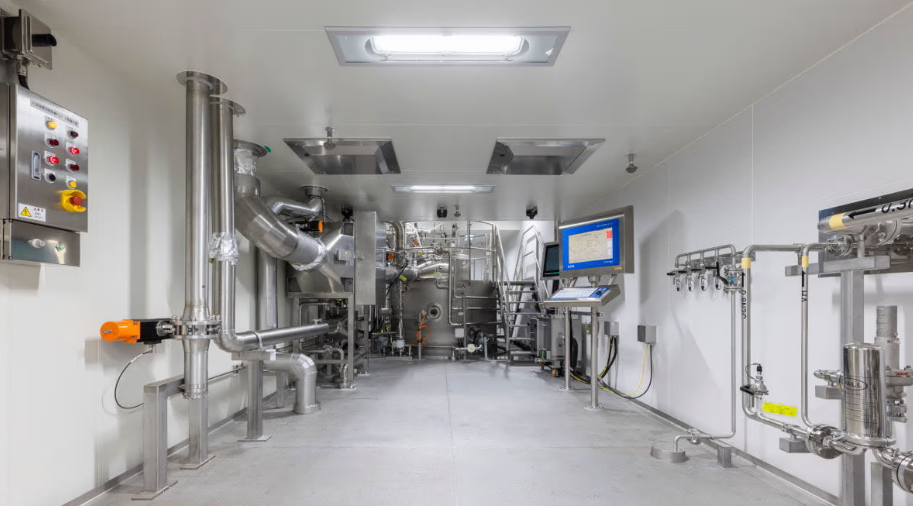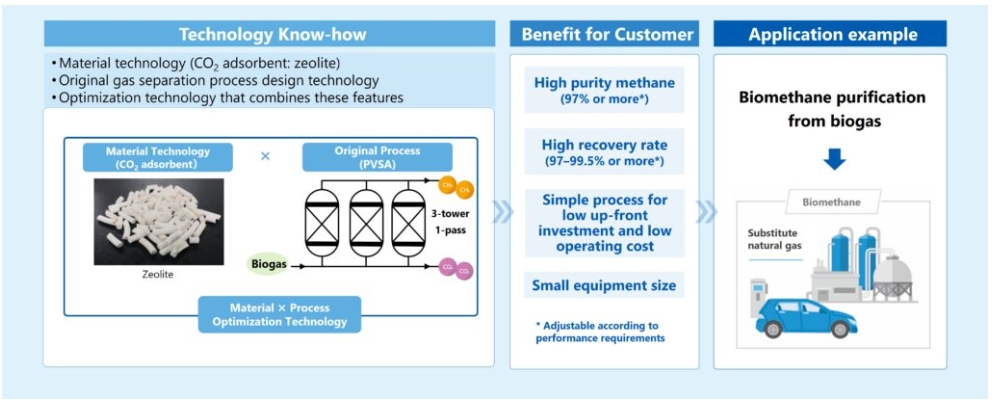
The trial processed biogas from sewage sludge, confirming the system’s ability to produce biomethane suitable for injection into natural gas pipelines or use as bio-compressed natural gas (CNG). Conducted over one month, the demonstration verified operational stability, achieving both high yield and purity—a significant milestone given the typical trade-off between these metrics. Kazuya Noda, Senior General Manager of Asahi Kasei’s Material Business Research & Development, stated: “We’re beginning to have concrete discussions with potential licensees around the world. After commercial-scale pilot studies, we plan market launch in 2027.”
Biomethane, derived from biogas, is gaining global attention as a sustainable energy source that leverages existing natural gas infrastructure, supporting a circular economy by reducing waste and generating usable energy. As of November 2024, 159 countries, including Japan, have committed to the Global Methane Pledge to reduce methane emissions. Demand for biomethane is rising in Europe for pipeline integration and bio-CNG conversion, in India to address waste and energy needs amid urbanization, and in the United States as a natural gas substitute.
Asahi Kasei’s system combines its expertise in catalyst development and gas separation with a novel zeolite adsorbent, featuring a high surface area and precise pore structure for efficient CO2 and methane separation. The company is actively pursuing global licensing opportunities to expand the technology’s reach, aiming to support sustainable energy solutions.
This initiative aligns with Asahi Kasei’s vision to advance research and development for a sustainable future, contributing to global efforts to enhance energy efficiency and reduce environmental impact through innovative technologies.