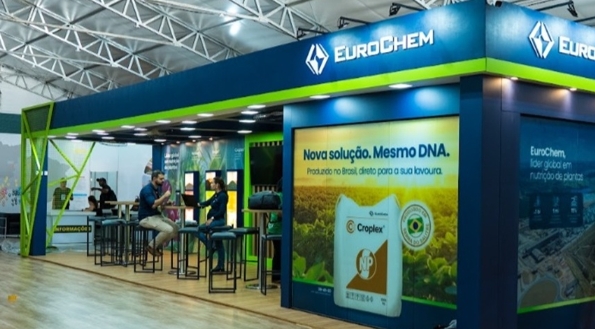
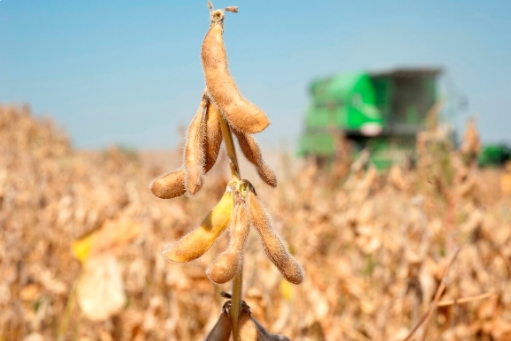
The adoption rate in the most recent harvests reached 82%, said Solon Araújo, founding board member of the National Association for Promotion and Innovation of the Biological Industry (ANPII Bio). Araújo spoke at the panel “Bioinputs in Focus: Quality, Innovation and Future in the Field,” organized by the Secretariat of Agriculture, Livestock, Sustainable Production and Irrigation (Seapi) of Rio Grande do Sul at the Expointer International Pavilion. He presented an overview of Brazil’s bioinput production, noting that the country has been a global reference in soybean inoculant research since the 1950s, when studies began in Rio Grande do Sul.
Despite this pioneering history, Rio Grande do Sul currently registers the lowest inoculant usage rate in Brazil. Araújo explained: “Much of this is due to the myth that inoculants were unnecessary to replenish microbiological agents, since they would already be present in the soils of Rio Grande do Sul.” He added that growth in bioinput adoption is being driven by demand for less polluting products, research advances, wider availability of microbial agents, proven efficiency, higher product quality, and greater farmer awareness.
Araújo estimated that Brazil’s biological products market could reach BRL 7 billion, while emphasizing: “There is still room for growth.” He highlighted the increasing registration of bioinputs for other crops such as cotton, coffee, and citrus, as well as promising studies for irrigated rice. He also noted expectations for expanding the use of biofungicides.
At the same panel, the “ABC+RS Plan” was introduced by the state government, aiming to expand bioinput use across one million hectares in Rio Grande do Sul. The plan’s coordinator, Jackson Brilhante, stressed at the opening session that it is necessary to “address the challenges posed to achieve this goal.”
Rita Santin, technical coordinator at Agronômica, emphasized that the sector’s future depends on discovering new species and strains and researching multifunctional effects, including the combination of different microorganisms. “Formulating bioinputs with UV technology, stabilizers, and mitigators of water stress are some possibilities. Brazilian soils hold a very rich diversity of microorganisms, which can have countless functionalities,” Santin said.
Brazil’s steady increase in inoculant adoption reflects a combination of scientific research, evolving agricultural practices, and policies encouraging sustainable inputs. Expointer 2025 highlighted the country’s leadership in bioinputs and its potential for continued expansion across multiple crops and regions.