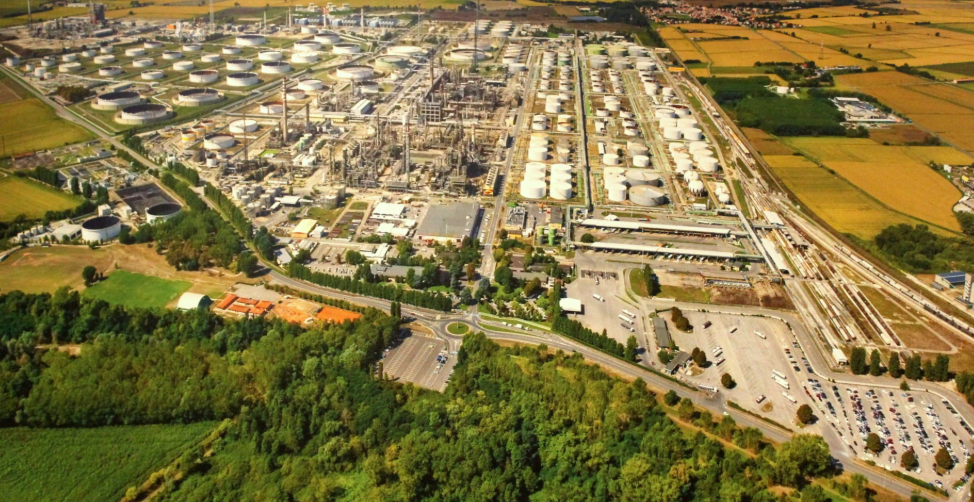
The project will involve converting the existing Hydrocracker (HDC2) unit using Ecofining™ technology, along with constructing a pre-treatment facility for waste and residues. These will serve as the primary biogenic feedstocks for the production of HVO biofuels under Enilive. Hydrogen will be supplied from existing facilities, while infrastructure, including logistics, will be adjusted to support the new operations.
Production of HVO diesel and SAF-biojet for aviation is expected to begin in 2028. Conventional fuel output will continue, with the biorefinery operating alongside existing units to expand product diversification. Once operational, the new facilities will process up to 550,000 tonnes of feedstock annually, with flexibility to produce both SAF-biojet and HVO diesel. Feedstocks will be sourced mainly from waste and residues.
Through Enilive, Eni is already the second-largest producer of HVO biofuels in Europe, including diesel and SAF. The Sannazzaro project will further reinforce this position. The site will play a strategic role in supplying traditional jet fuel and SAF to north-west Italian airports, supported by its direct pipeline link to Milan Malpensa airport and depots serving other airports in the region.
The initiative aligns with Eni’s broader plan to increase biorefining capacity significantly. Current output stands at 1.65 million tonnes per year, with targets to exceed 3 million tonnes in 2028 and 5 million tonnes in 2030. Within this framework, production of SAF could reach up to 2 million tonnes annually by 2030.
Eni is also expanding its biorefining network. At present, biofuels are produced at Enilive’s plants in Venice and Gela, as well as through the St. Bernard Renewables LLC biorefinery in Louisiana, a 50% joint venture. A new biorefinery in Livorno, Italy, is scheduled to come online in 2026. Additional projects are underway with two plants under construction in Malaysia and South Korea, and another biorefinery announced for Priolo, Sicily.
The conversion of units at Sannazzaro marks an important step in diversifying output and meeting growing demand for renewable fuels in both road transport and aviation. It underscores Eni’s commitment to expand biofuel production capacity while integrating traditional and renewable operations within the same refinery system.
By combining new processing capabilities with existing infrastructure, the Sannazzaro biorefinery is expected to strengthen Italy’s role in supplying sustainable fuels to both domestic and international markets, supporting long-term growth in renewable energy production.