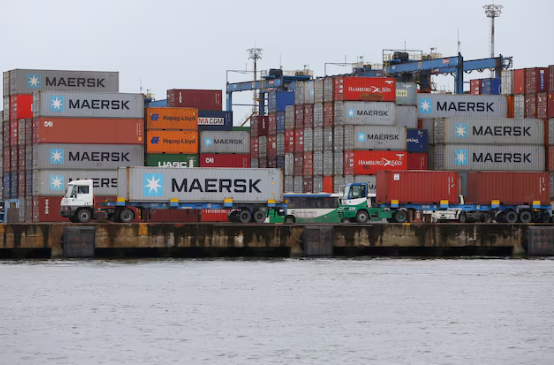
Maersk containers are seen at the Port of Santos, Brazil September 23, 2019.
The company stated that the blend contains 10% ethanol and is being tested in its vessel engines to evaluate performance and emission reduction potential. Maersk, which accounts for about 15% of the global maritime shipping market, said that if the entire industry adopted this type of fuel mix, it could create global demand for approximately 50 billion liters of ethanol per year. Brazil’s ethanol production in 2025 is estimated at around 35 billion liters, highlighting the potential for a substantial new market for the country’s biofuel sector.
Danilo Veras, Vice President of Regulatory Policies at Maersk Latam, said: “This is the first time ethanol is being burned in a two-stroke engine that's four stories tall – it's a completely different scale of research and level of concern.” He emphasized that the tests represent a significant step in applying ethanol-based solutions to large-scale maritime operations.
Maersk selected Brazilian ethanol for the trials due to its sustainable sourcing. The ethanol used in the test is derived primarily from existing sugarcane cultivation areas, and in the case of corn-based ethanol, from fields that are also used for soybean production. According to Veras, this approach minimizes environmental impacts and avoids the expansion of agricultural land, reducing potential deforestation concerns.
The ethanol blend testing is part of Maersk’s broader goal to achieve net-zero greenhouse gas emissions by 2040. The company has been investing heavily in alternative fuels and new propulsion technologies to meet international climate targets and address the maritime sector’s environmental footprint. Shipping currently contributes around 3% of global greenhouse gas emissions, and decarbonization has become a key focus for industry leaders.
The ongoing tests will continue through October 23, beginning with ethanol blend trials in methanol-powered vessels, followed by bunker fuel testing in traditional marine engines. Maersk said that the results of these tests will determine the next steps toward potential commercial application.
If successful, Maersk plans to initiate negotiations with major Brazilian ethanol producers, including Raízen (RAIZ4.SA), Copersucar, Inpasa, FS, and Atvos, to explore large-scale supply partnerships. Such agreements could strengthen cooperation between the shipping and biofuel industries while promoting cleaner energy solutions for global maritime transport.
Maersk’s ethanol initiative reflects its ongoing commitment to environmental innovation and sustainable growth. By integrating biofuels such as ethanol into its operations, the company aims to demonstrate the feasibility of low-carbon alternatives and support the global transition toward greener shipping practices.