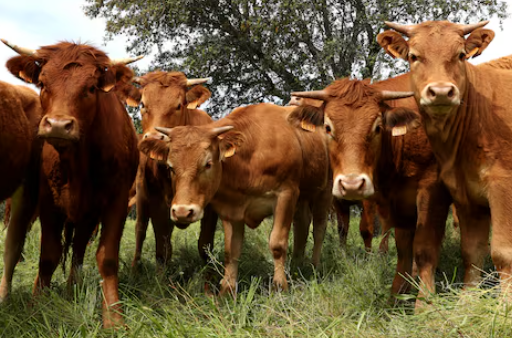
A cattle of cows graze at a ranch in Portezuelo, Spain, April 23, 2018.
Lumpy skin disease is caused by a virus transmitted mainly through insect bites and affects cattle and buffalo. It leads to the formation of skin blisters and a decline in milk production. Although the disease poses no risk to humans, it often results in severe economic losses for farmers and triggers trade restrictions in affected regions.
Planas stated: “We have temporarily suspended exports of live animals to prevent the spread of the disease; France has done the same.” His comments underscored the coordinated response between neighboring countries to control the outbreak and protect their livestock industries.
According to the Spanish Ministry of Agriculture, the outbreak was identified on a farm near Girona in northeastern Spain. The farm housed 123 dairy heifers, and three animals showed symptoms on October 1. Authorities confirmed the presence of the virus after laboratory testing and immediately implemented containment measures, including quarantine and monitoring of nearby farms.
France had imposed a similar temporary ban on cattle exports and related events, including bullfighting, on Friday. Both countries are taking preventive measures to limit the disease’s transmission across borders, given the role of insects in spreading the virus.
The Spanish government has increased surveillance and veterinary inspections in regions close to the outbreak site. Officials are also coordinating with the European Union’s animal health agencies to ensure that disease control protocols align with international standards. Veterinary authorities are focusing on rapid detection, insect control, and disinfection of affected areas to minimize further risk.
The temporary suspension of cattle exports is expected to impact Spain’s livestock sector, which exports live animals primarily to countries within the European Union, North Africa, and the Middle East. However, the government emphasized that the measure is necessary to safeguard animal health and stabilize the industry in the long term.
The outbreak marks one of the latest challenges for European livestock producers, as similar cases have been reported in several neighboring countries in recent years. Spain’s prompt response aims to contain the disease swiftly and prevent its spread to other regions, protecting both domestic production and international trade relationships.