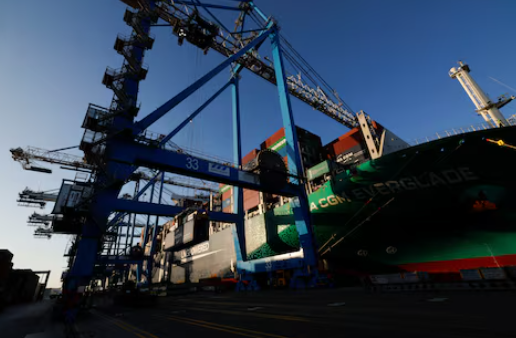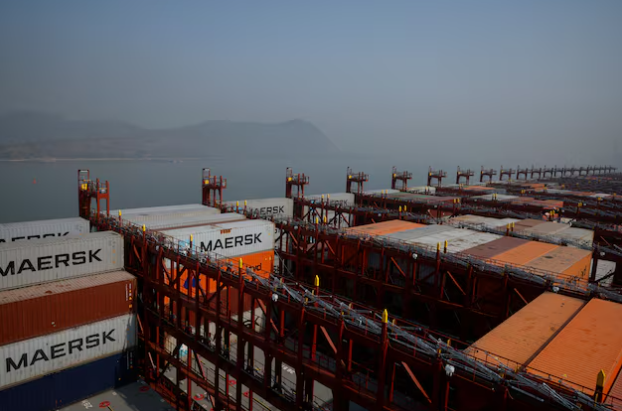
Maersk shipping containers are stored aboard the ‘Albert Maersk’ at the APM Terminals, in Navi Mumbai, India, February 28, 2025.
According to a company statement, Maersk has signed a memorandum of understanding (MoU) with the Gujarat Maritime Board to increase the port’s capacity and improve operational efficiency. The potential expansion project is subject to a long-term concession agreement with Indian authorities. “Subject to a long-term concession agreement with Indian authorities, the expansion will significantly enhance the port's capacity and capabilities,” Maersk said.
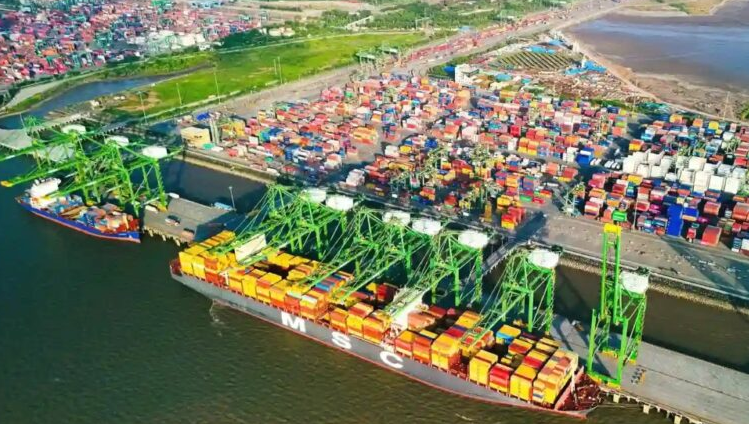
Located along India’s western coast, Pipavav Port is one of the country’s major gateways for container and bulk cargo. The planned investment aims to modernize port infrastructure, expand berth capacity, and introduce advanced cargo-handling technology to improve turnaround times and accommodate larger vessels. The project is expected to enhance India’s position as a key logistics hub in the Indian Ocean region and contribute to the country’s growing maritime trade.
In addition to the agreement with the Gujarat Maritime Board, Maersk announced that it has signed several other memorandums of understanding with shipyards in India to explore deeper cooperation in ship repair, maintenance, and related maritime services. “India possesses significant infrastructure capabilities that Maersk wishes to capitalise on,” the company said, noting that the partnerships will focus on strengthening supply chain efficiency and supporting sustainable shipping operations.
The planned expansion aligns with Maersk’s global strategy to increase investment in key emerging markets and improve port connectivity across Asia. The company has been actively developing its terminal network to support growing trade volumes and the increasing demand for integrated logistics solutions.
APM Terminals, which operates over 60 ports and terminals worldwide, has been present in India for more than two decades. The proposed $2 billion investment would mark one of Maersk’s largest port development projects in the country, reflecting its confidence in India’s long-term trade potential.
The collaboration between Maersk and the Gujarat Maritime Board is expected to enhance cargo handling efficiency, create employment opportunities, and stimulate regional economic growth. It also demonstrates the ongoing commitment of global logistics companies to expand partnerships within India’s rapidly developing port and maritime infrastructure sector.
Maersk stated that discussions with Indian authorities and stakeholders are continuing, and further details on project timelines and investment structure will be released following the final concession agreement.