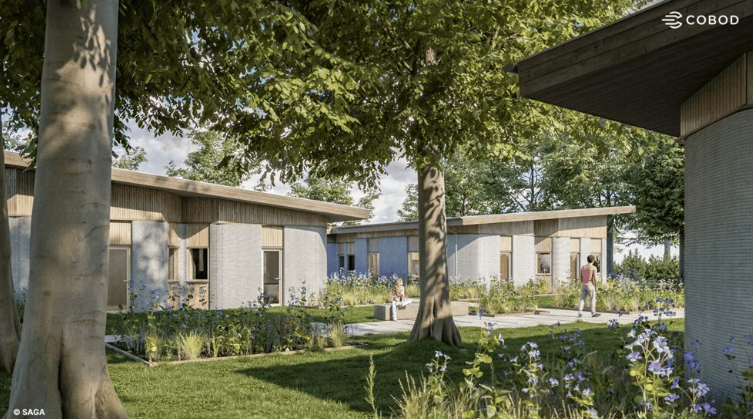
A render of the completed Skovsporet (the forest trail) in Holstebro, Denmark
The Bod3 printers operated with a track system that allowed for uninterrupted printing of long wall sections. The material used was D.fab concrete, containing Futurecem, a low-carbon cement produced by Aalborg Portland in Denmark. Print beds were placed between existing trees, which made it possible to preserve 95% of them. The project site is located near VIA University College’s Holstebro campus, offering convenient access for students. Each apartment is designed with a kitchen, study area, lounge, bathroom, and double bed, providing compact but complete living spaces.
Architecturally, the structures feature slanted ceilings and large roof windows to enhance natural lighting. The six buildings are positioned around a central shared courtyard, which includes landscaped gardens, pedestrian pathways, and bicycle parking facilities. The layout aims to create a sustainable and community-oriented environment, blending modern design with the natural surroundings.
According to Mikkel Brich, cofounder of 3DCP Group: “Skovsporet proved that 3D construction printing can meet the strict requirements of subsidised housing while delivering high precision and productivity. As we deepened our understanding of the technology, we increased productivity from one building to the next, and are confident we can build even faster in future projects.”
The completion of the 3D-printing phase marks a significant milestone for Denmark’s sustainable construction sector, showcasing how advanced technology can accelerate affordable housing development. The project demonstrates the efficiency and scalability of 3D construction printing in real-world applications. It also highlights the potential to combine innovative digital construction methods with environmentally responsible materials and practices.
With construction efficiency improving progressively across the six buildings, the “Skovsporet” project is expected to serve as a reference model for future housing developments in Europe. By integrating low-carbon materials and efficient design solutions, it represents a forward-looking approach to sustainable urban growth. The project aligns with Denmark’s broader efforts to promote sustainable architecture and green building technologies while addressing the growing demand for affordable student accommodation.