Mercom India Research noted: “Several projects slated for Q1 commissioning were postponed due to factors such as insufficient substation capacity and transmission infrastructure, land acquisition challenges, and delays in PPA signings.” Additionally, a shortage of domestically produced solar modules and higher prices impacted installations.
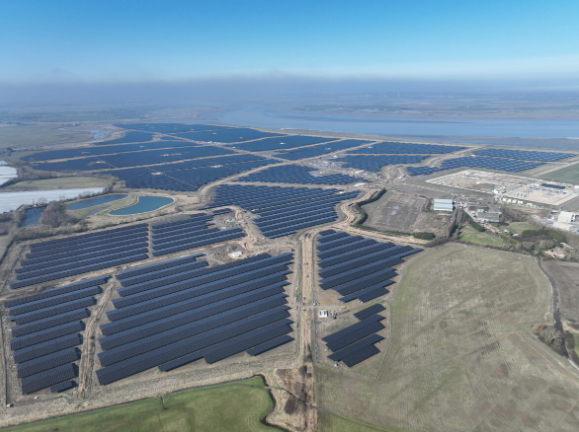
Despite the decline, solar power accounted for 54% of India’s total new power capacity additions, which reached 12.3 GW in the quarter. Rajasthan and Gujarat led large-scale solar installations, contributing 35% and 30% of the capacity, respectively.
By March 2025, India’s cumulative installed solar capacity reached 104.6 GW, representing 22% of the nation’s total power capacity and 48% of its renewable energy capacity. A Mercom India Research spokesperson stated: “Solar energy continues to play a significant role in India’s energy mix, driving the transition to renewable sources despite challenges in project execution.”
The data underscores India’s ongoing commitment to expanding its renewable energy infrastructure, with solar power remaining a cornerstone of the country’s sustainable energy goals, even as logistical and supply challenges temporarily slow progress.