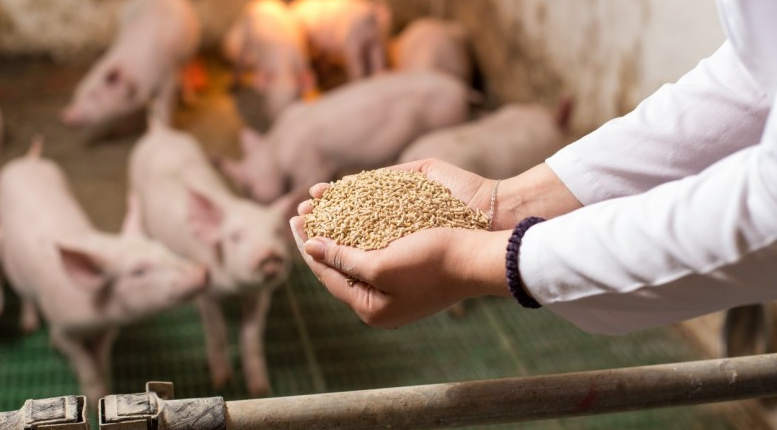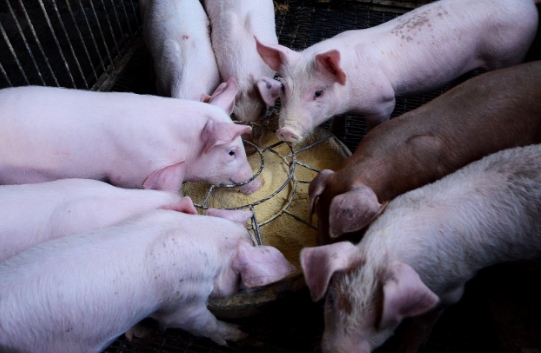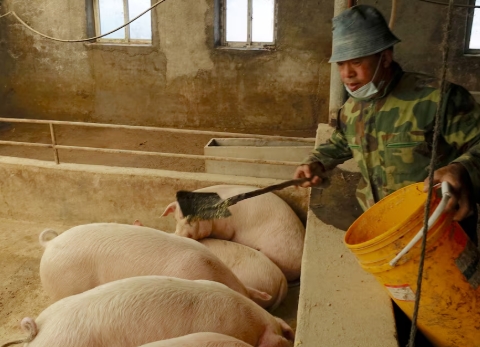
Pig farmer Han Yi feeds pigs on his farm at a village in Changtu county, Liaoning province, China January 17, 2019.
This initiative could reduce China’s annual soybean imports by approximately 10 million metric tons, equivalent to half of the $12 billion in U.S. soybean purchases in 2024. China, the world’s largest soybean importer, sources about 20% of its soybeans from the U.S., down from 41% in 2016, while also purchasing from Brazil, a leading supplier. Soybeans are processed in China into cooking oil and soymeal, a protein-rich feed ingredient valued for its amino acid profile and compatibility with grains like corn and wheat.
Large-scale swine breeders, such as Muyuan Foods and Wens Foodstuff, have already reduced soymeal use, with Muyuan lowering it to 5.7% in 2023 from 7.3% in 2022, and Wens reporting 7.4% in 2021. However, smaller producers, who manage half of the world’s pig population, face challenges due to limited resources and reliance on traditional soymeal-based feed. Matthew Nicol, senior analyst at China Policy, stated: “There is a significant habitual preference among smallholders for traditional soymeal-based formulations, largely due to familiarity, trust, and perceived reliability.” He added: “Larger firms will move quickly, while smaller producers may lag or even face setbacks.”
The transition involves adopting alternative protein sources, which can be costly and may affect animal growth, particularly for smaller farms. Compared to other regions, China’s soymeal use is already lower. U.S. hog feed contains 15% to 25% soymeal, while Southeast Asia uses about 25% for poultry and 20% for swine, according to industry experts. The shift aims to enhance China’s food security while maintaining stable agricultural output.