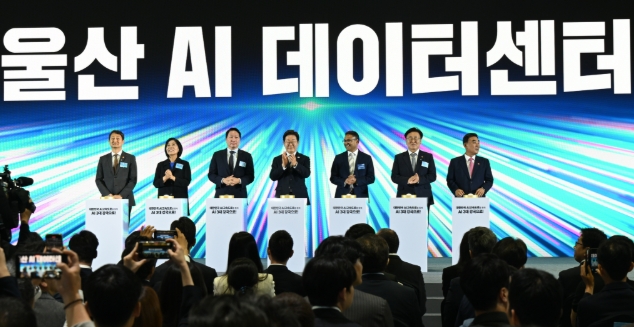
President Lee Jae Myung, center, takes part in a commemorative ceremony with attendees during the launch event for the Ulsan AI Data Center, part of the “Korea AI Highway” initiative, at the Ulsan Exhibition and Convention Center on June 20.
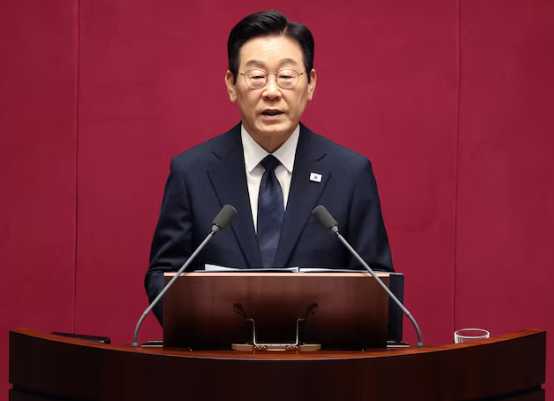
The ceremony was attended by South Korean President Lee Jae Myung, SK Group Chairman Chey, AWS Vice President of Infrastructure Prasad Kalyanaraman, and Science and ICT Minister Yoo Sang-im. The project addresses the rising global demand for AI services, with McKinsey forecasting a 22% annual growth in data center demand through 2030, and AI-specific centers expected to grow by 33% annually. The global data center market is projected to reach $437.3 billion by 2030, according to Grand View Research.
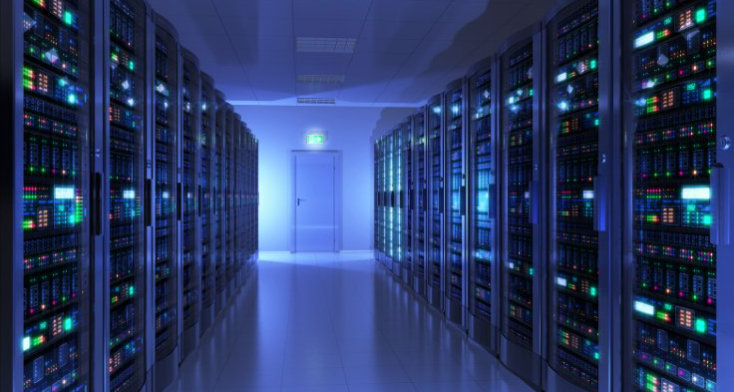
South Korea currently has 43 data centers, significantly fewer than the United States (5,426), Germany (529), or China (449), per Statista. The project supports the government’s “AI Highway” vision to establish data centers nationwide. SK’s choice of the Mipo site, near an LNG cogeneration plant operated by SK Gas, is expected to ensure a stable power supply. Kim Soo-hyun, a senior researcher at the Korea Data Center Alliance, noted: “Electricity supply is a chronic issue in the data center industry. Public opposition, with residents viewing these as undesirable facilities, is also a major obstacle.”
A roundtable on global AI cooperation followed the ceremony, involving local AI companies such as Kakao, Naver Cloud, LG AI Research, and FuriosaAI. Participants discussed strategies to boost South Korea’s AI competitiveness and advocated for policies to support proprietary AI model development. The Ministry of Science and ICT announced plans to select up to five teams for a national “AI Foundation Model” project, providing access to 10,000 GPUs to achieve performance levels comparable to leading global models. Companies like LG AI Research, Naver, and Upstage are expected to participate.
The government is considering expanding tax credits for AI data center investments to accelerate South Korea’s transition to AI-driven technologies. The Ulsan data center strengthens the nation’s infrastructure and positions it as a key player in the global AI landscape.