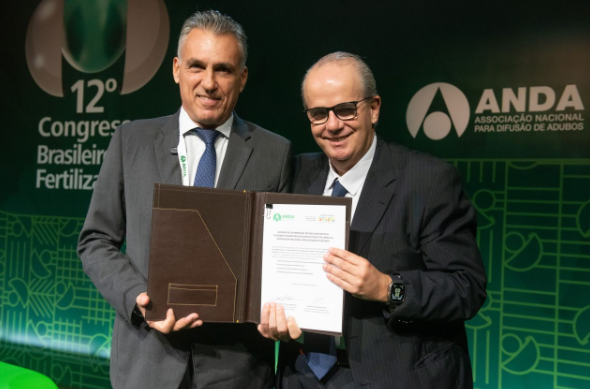
The agreement was signed by Guilherme Campos Júnior, Secretary of Agricultural Policy at the Ministry of Agriculture and Livestock (MAPA), and Eduardo de Souza Monteiro, Chairman of the Brazilian Association for Fertilizer Diffusion (ANDA). It sets goals to enhance industry statistics, stimulate innovation and bioinputs, generate strategic knowledge, and mobilize resources to support sustainable growth.
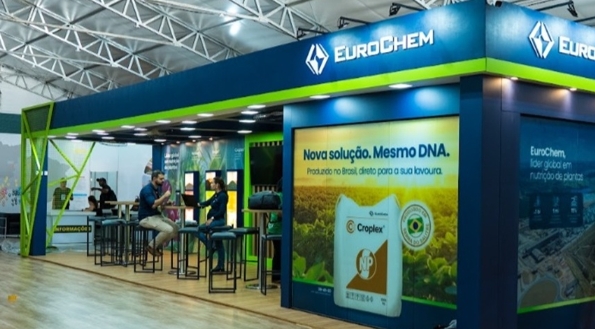
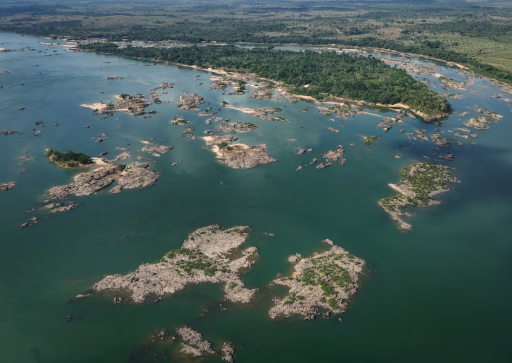
Ongoing domestic projects align with this strategy. Geraldo Alckmin, Brazil’s Vice President and Chairman of the National Fertilizer and Plant Nutrition Council (Confert), outlined investments in key projects: the Serra do Salitre Complex in Minas Gerais, which could meet 15% of national phosphate demand; the restart of Fafen Bahia and ANSA Paraná nitrogen plants, expected to supply up to 20% of Brazil’s nitrogen requirements; and the Autazes Project in Amazonas, focused on potassium chloride, which could cover 20% of national consumption. These developments are supported by legislative measures, including Bill 699/2023 (Profert), which proposes tax incentives for fertilizer production, and Bill 2,022/2022, already approved in committee, which eliminates PIS/Cofins taxes on fertilizer imports and commercialization.
Although fertilizer deliveries are forecast to remain between 48–49 million tons in 2024/25 — record levels according to analysts Jefferson Souza (Agrinvest) and Carlos Cogo (Cogo Inteligência em Agronegócio) — experts stressed the need to diversify beyond imported volumes. Discussions at the congress highlighted the role of regenerative agriculture, bioinputs, and next-generation fertilizers. José Carlos Polidoro (MAPA), Jenny Wang (Mosaic), and Francisco Matturro (Rede ILPF) emphasized the importance of regulating the Bioinputs Law to accelerate adoption of low-impact technologies, aiming to help restore 40 million hectares of degraded land by 2036.
Innovation also featured strongly, with nitrogen solutions designed to reduce volatilization losses presented as key tools for improving efficiency. The 4th Carlos Florence Award, granted by ANDA, recognized research from Esalq/USP in this area.
Industry specialists, including Carlos Cogo, Renata Cardarelli (Argus Media), and Gustavo Zaitune (Adufértil), also pointed to external risks. They noted that global trade tensions and logistical challenges create vulnerabilities for Brazil as one of the largest fertilizer importers. In parallel, rural credit concerns were raised, as sustaining high consumption will require structural financing measures. The record-breaking Plano Safra 2025/26 support package highlights the need for consistent public policies to maintain competitiveness.
At the congress closing session, Eduardo Monteiro remarked: “We emphasize the importance of jointly discussing the present, while designing the future. The fertilizer sector is part of the solution to the global challenge of producing food with lower environmental impact.”