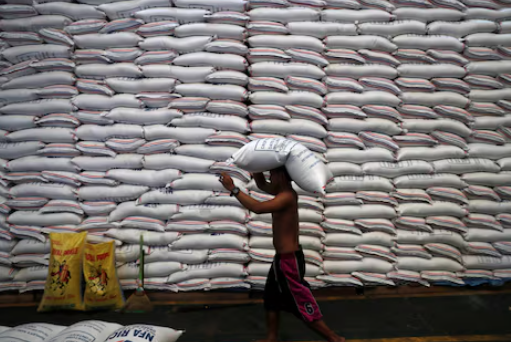
A worker carries on his head a sack of rice inside a government rice warehouse National Food Authority in Quezon city, Metro Manila in Philippines, August 9, 2018. Picture taken August 9, 2018.
"Under the President's directive, the two-month import suspension will be extended," Presidential Communications Office Undersecretary Claire Castro stated during a press briefing.
The Philippines, a major global rice importer, brought in 4.8 million metric tons of rice last year, primarily from Vietnam and Thailand. To address rising rice prices, which reached a 15-year peak annual increase of 24.4% in March last year, the government has implemented measures to manage inflation. By August, rice price inflation had decreased by 17%, contributing to an average inflation rate of 1.7% over eight months, below the government’s 2.0% to 4.0% target range.
Agriculture Secretary Francisco Tiu Laurel indicated that he would propose extending the import ban by an additional 15 to 30 days. The Department of Agriculture is also considering raising tariffs on imported rice to further support local markets. Additionally, the government has reduced tariffs on rice and extended tariff reductions on other commodities to ensure sufficient supply and combat inflation.
These efforts reflect a balanced approach to supporting local agriculture while addressing consumer needs and maintaining economic stability.