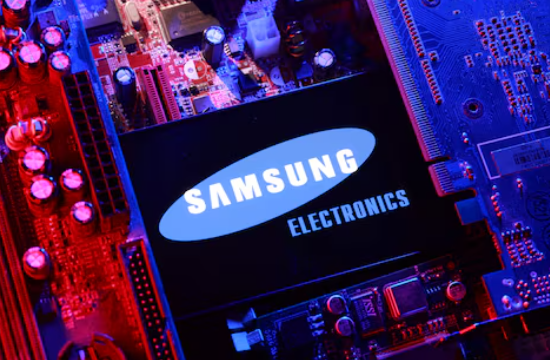
A Samsung Electronics logo and a computer motherboard appear in this illustration taken August 25, 2025.
The world’s largest producer of memory chips is projected to record an operating profit of 10.1 trillion won ($7.11 billion) for the July–September period, based on data from 31 analysts compiled by LSEG SmartEstimate. The figure represents a 10% increase from the same period last year. Analysts attributed the improvement mainly to higher prices for conventional memory chips, which helped offset lower shipment volumes of high-bandwidth memory (HBM) chips, as Samsung has not yet started supplying its latest HBM products to Nvidia.
HBM chips are key components for artificial intelligence development. By stacking chips vertically, they enable faster data processing and greater energy efficiency. Analysts noted that AI-related demand from hyperscalers and large-scale computing projects, including ChatGPT, has increased pressure on general servers, pushing up demand and prices for conventional memory. According to TrendForce, prices of certain DRAM chips used in servers, smartphones, and PCs surged 171.8% year-on-year in the third quarter.
Although Samsung’s standard memory business performed well, delays in delivering its newest 12-layer HBM3E chips to Nvidia have impacted profits and share performance. Competitors SK Hynix and Micron have benefited more from AI-driven demand. Analysts also mentioned that Samsung’s sales in China have been constrained by restrictions on advanced chip exports from the United States.
Despite these challenges, market sentiment toward Samsung’s semiconductor division is improving, supported by supply agreements with major technology companies such as OpenAI and Tesla. Samsung’s shares have gained over 43% since announcing a chip supply deal with Tesla in July.
During OpenAI CEO Sam Altman’s visit to South Korea earlier this month, Samsung, SK Hynix, and OpenAI confirmed collaborations to supply advanced memory chips for OpenAI’s Stargate project. Analysts said these partnerships are expected to strengthen Samsung’s position in the AI memory market. Ryu Young-ho, a senior analyst at NH Investment & Securities, commented that the AI collaboration between OpenAI and AMD, one of Samsung’s major HBM clients, “would also benefit Samsung.”
Ryu added that Samsung’s $16.5 billion foundry agreement with Tesla has raised expectations that its contract chip manufacturing division could secure more orders from global technology firms if the project proceeds as scheduled.
Analysts cautioned, however, that certain risks remain, including potential U.S. tariffs on chips and China’s export controls on rare earth materials used in advanced semiconductor production. In September, Micron reported that it expects all of its HBM chips for 2026 to sell out soon, reflecting continued strong demand across the sector.
Samsung is scheduled to announce its revenue and profit estimates on Tuesday, with detailed results to be released later this month.