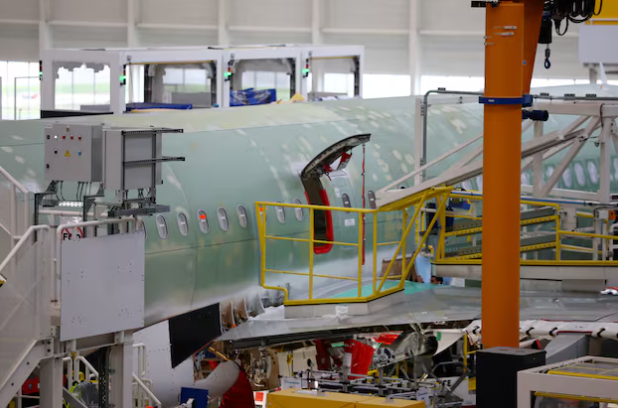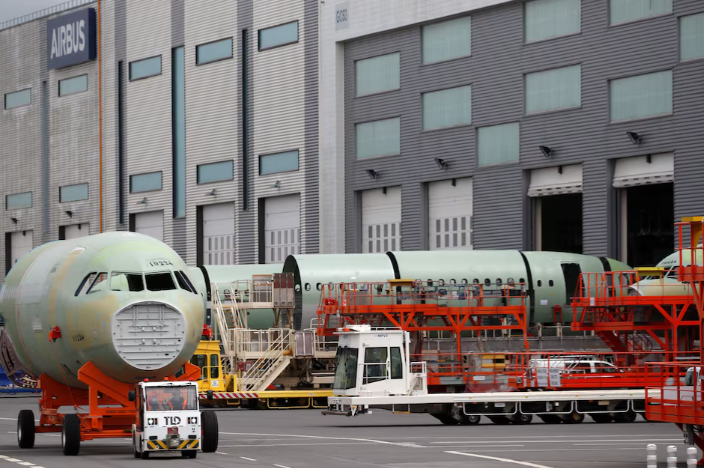
A fuselage section of an Airbus A320-family aircraft is transported at the Airbus facility in Montoir-de-Bretagne near Saint-Nazaire, France, July 1, 2020.
The update addressed a newly discovered vulnerability in the flight control system that could be affected by solar flares. The issue came to light following a recent mid-air altitude deviation on a JetBlue A320 flight. Global aviation regulators mandated the fix before the next flight, prompting Airbus to issue an eight-page emergency service bulletin on Friday.
The directive covered approximately 6,000 A320-family jets, representing about half the active fleet of this type. The repair requires uploading a previous, verified software version using a portable data loader connected in the cockpit. Most aircraft needed only this quick procedure, originally estimated at three hours per jet.
By Monday, dozens of carriers across Asia, Europe, the Middle East, and the Americas reported that the majority of their affected aircraft had received the update and returned to service. Flyadeal, a Saudi low-cost carrier, completed the work overnight.
"The thing hit us about 9 p.m. (Jeddah time) and I was back in here about 9:30. I was actually quite surprised how quickly we got through it: there are always complexities," said Steven Greenway, CEO of Flyadeal.
Only a small number of airlines faced brief scheduling adjustments. Colombia's Avianca temporarily suspended new bookings on some routes until December 8 while finishing the required checks.
Initial estimates of affected aircraft and downtime were revised downward significantly over the weekend as engineers identified the exact serial numbers involved. The number of older jets requiring full computer replacement instead of a simple software reload also proved lower than first thought.
The rapid response followed close coordination between Airbus and aviation authorities worldwide. Industry sources noted that the company applied lessons from recent safety challenges in commercial aviation, choosing early transparency and decisive action.
"Is Airbus acting with the Boeing MAX crisis in mind? Absolutely — every company in the aviation sector is," said Ronn Torossian, chairman of New York-based 5W Public Relations. "Boeing paid the reputational price for hesitation and opacity. Airbus clearly wants to show...a willingness to say, 'We could have done better.' That resonates with regulators, customers, and the flying public."
Airbus declined to comment beyond its original bulletin, but flights operated by A320-family aircraft returned to regular schedules by Monday with minimal lasting disruption, even during the busy U.S. Thanksgiving travel period.