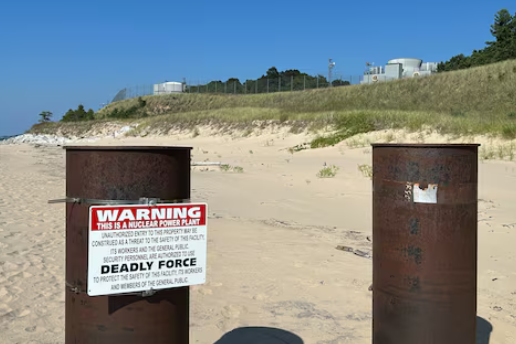
A view of the grounds at the Palisades nuclear reactor in Covert Township, Michigan, U.S., August 14, 2024.
The funding supports efforts to meet growing electricity demand in the United States, driven by expanding needs from data centers, artificial intelligence applications, cryptocurrency operations, and the increasing adoption of electric vehicles—the first sustained rise in national power demand in two decades.
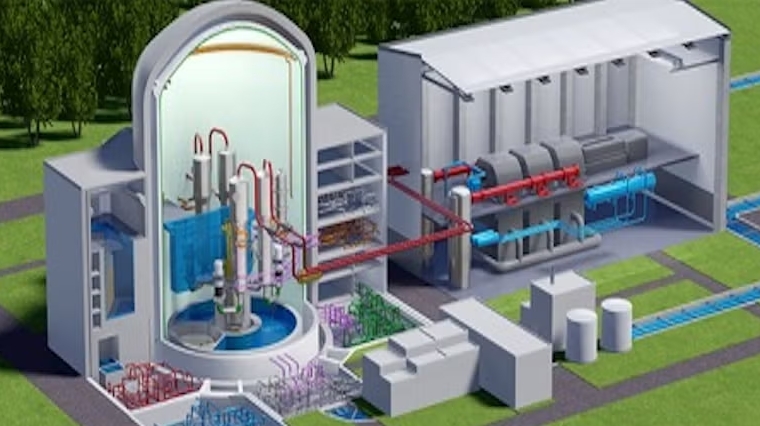
SMRs are designed to be manufactured in factories and assembled on-site, which supporters say can reduce construction time and costs compared to traditional large-scale reactors. However, no SMRs are currently under construction in the U.S., and questions remain about their final cost-competitiveness with existing large reactors. Like all nuclear power plants, SMRs produce long-lived radioactive waste that requires secure, long-term management.
Under the agreement, TVA—a federally owned utility—will receive up to $400 million in cost-shared federal funding to support development of a GE Hitachi BWRX-300 small modular reactor at the Clinch River site in Oak Ridge, Tennessee, along with related initiatives.
Holtec International will also receive up to $400 million to design and license two SMR-160 reactors at its Palisades site in Michigan. The company is separately working to restart the existing 800-megawatt Palisades conventional reactor, which ceased operations in 2022 after more than 50 years of service. That restart project previously received a $1.52 billion conditional loan guarantee from the Department of Energy, of which over $490 million has already been disbursed.
The Department of Energy anticipates that the first SMRs supported by these awards could enter service in the early 2030s.
"These awards ensure we can deploy these reactors as soon as possible," Energy Secretary Chris Wright stated in the official announcement.
The initiative reflects ongoing U.S. efforts to expand domestic nuclear capacity using advanced reactor designs that aim to offer greater flexibility, enhanced safety features, and faster deployment timelines compared to conventional nuclear plants.