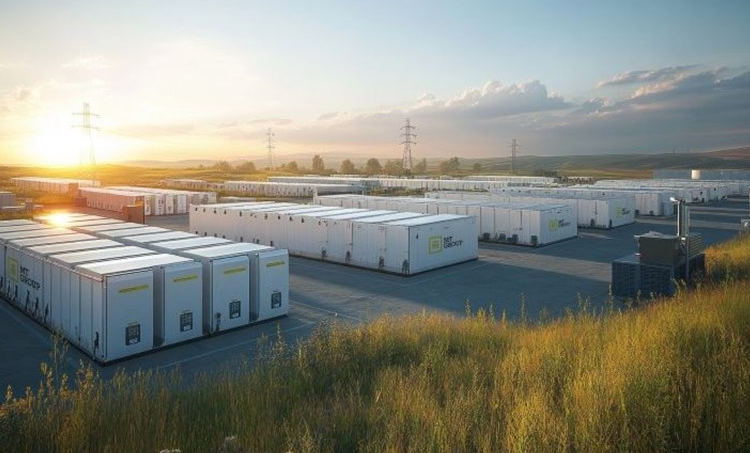
Vattenfall will gain access to 400MWh of storage within the battery.
Effective from 1 January 2028, the contract provides Vattenfall exclusive optimisation rights to 100 MW of power capacity and 400 MWh of energy storage within the facility's total 300 MW / 1,200 MWh configuration. Vattenfall will use this capacity for grid balancing, energy trading, and portfolio optimisation.
The tolling structure ensures GIGA Storage receives predictable revenue over the agreement period, strengthening Project Leopard's financial framework and supporting its development as one of Europe's largest battery storage projects.
Construction of Project Leopard began after financial close in May 2025. Once operational, the system will be the first in the Netherlands to operate under a transmission-driven transport restriction agreement with grid operator TenneT, helping alleviate network congestion while enabling greater integration of renewable generation.
The partnership combines GIGA Storage's expertise in developing and operating utility-scale battery systems with Vattenfall's extensive experience in energy markets and storage optimisation.
GIGA Storage CEO Kevin Dijkers commented: "This agreement with Vattenfall demonstrates the strategic importance of utility-scale storage in addressing today's grid challenges. Leopard will play a key role in reducing congestion pressure on the TenneT network while accelerating the integration of renewable energy. We are proud to deliver this project together with Vattenfall, one of Europe's leading energy companies."
During 2025, Vattenfall has continued to expand its European battery storage portfolio, recently securing optimisation contracts for 50 MW in the Netherlands and 55 MW in Germany.
Project Leopard will contribute substantial flexible capacity to the Dutch power system at a time of rapid renewable energy growth. By providing fast-response storage, it will enhance grid reliability, support frequency regulation, and facilitate more efficient use of wind and solar resources across the region.
Both companies emphasise that large-scale battery systems are essential for managing the increasing variability of renewable generation and maintaining security of supply as Europe advances toward its clean energy objectives.
With construction progressing on schedule, Project Leopard remains on track for full commercial operation, marking another milestone in the Netherlands' transition to a more flexible and sustainable electricity network.