Thirty years ago last November, the IAEA’s INSAG-7 report took the prevailing narrative of the Chornobyl disaster and turned it on its head. Here, a key accident investigator tells the inside story of the report’s origins.
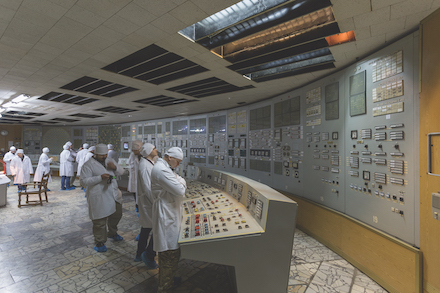
As the dust and Cesium settled, all the diverse spokesmen of Western nuclear energy were hard-pressed to reassure an anxious public that such an accident could not occur at home. In doing so, nuclear professionals highlighted essential differences between the RBMK and Western reactors, but also endorsed the core talking points of the Soviet Union’s own accident investigators, which emphasised the role of human error.
The official position of the USSR was laid out by academician Valeriy Legasov in Vienna in 1986 and formed the basis of the IAEA’s International Nuclear Safety Advisory Group (INSAG-1) report. According to Legasov and INSAG-1, even though the RBMK lacked secondary containment and exhibited a positive void coefficient, only flagrant violations of the safety regulations could have translated design drawbacks into disaster. Many commentators identified the accident’s proximate cause as reckless malfeasance in Chornobyl’s control room. Poorly trained operators had reportedly disabled every control and safety system of their reactor and carried out an unauthorised safety test that directly triggered a catastrophic power excursion.
In 1991 the authors of INSAG-7 took these conclusions and lanced them like a boil. In studiously measured, diplomatic language, they revealed how the core judgments of INSAG-1 had been predicated on falsehoods. Anxious to save face and stave off possible sanctions against their nuclear industry, the USSR’s representatives had heavily scapegoated the operational personnel of Chornobyl NPP. Not only did several accusations of rule-breaking prove to be false, but the operators were blamed for violating regulations that appeared only after the accident.
The whistleblowers responsible for this reversal came from within the Soviet Union itself. Namely, a team of recently-promoted specialists from Moscow’s fledgling nuclear regulatory agency. Wordily abbreviated as GosAtomEnergoNadzor, this previously impotent watchdog had been bolstered with fresh expertise. Many of the new arrivals were decorated veterans from the radioactive battlefield that was the Chornobyl Exclusion Zone. Chief among them was the engineer in charge of restarting Chornobyl’s surviving reactors: former Chief Engineer Nikolai Steinberg.
Q: You were not an author of the INSAG-7 report itself, but an author of the GosAtomEnergoNadzor report, which in many ways instigated the IAEA’s reappraisal. How did this come about?
A: In 1989 I told the GosAtomEnergoNadzor chairman, Vadim Malyshev, that my colleagues and I had collected certain information which contradicted the conclusions of Legasov’s report to the IAEA. Moreover, the safety-related upgrades applied to all RBMK reactors suggested that the accident’s causes as presented to the world were falsified.
We were already aware that specialists abroad had carried out their own calculations and analyses based on the information presented by Legasov and concluded that the Vienna report contained falsehoods. Around the same time, an investigation by our inspector Alexander Yadrikhinsky found that the root causes of the accident were flagrant violations of the rules of nuclear safety by the reactor’s designers. He identified specific errors in the design, most particularly the defect in the control rods which could introduce positive reactivity just as a shutdown was triggered.
I told Malyshev that since we represented the state regulatory organ of nuclear safety, we were obligated to produce our own investigation into the causes and circumstances of the accident, despite the several years that had elapsed. He agreed, but warned that our investigation could have serious political consequences. Therefore, our work would need to be beyond reproach, founded exclusively on verified information. He ordered the formation of an investigatory commission and named me its chairman.
Q: How did you gain access to the raw data and evidence gathered by prior investigations into the accident’s causes?
A: Our starting point was the data contained in the INSAG-1 report presented to the IAEA in August 1986. We weighed this version of the accident against the norms and regulations of nuclear safety in effect at the time of the reactor’s design and still in effect at the reactor’s destruction.
The managers of the RBMK’s design bureau (NIKIET) and scientific supervisory body (the Kurchatov Institute in Moscow) refused to provide the diagnostic data recorded by the reactor control devices at Chornobyl. We were also denied access to the records left by personnel in the operating logs prior to the accident. But we found these materials regardless. The deputy chairman of the Supreme Court of the USSR authorised us to work with the evidence gathered by criminal investigation into the accident. These documents were contaminated with radionuclides and stored in a separate room at the Supreme Court, but we were able to work there and make copies as needed.
All physical media containing information on the state of the reactor were extracted from the ‘Skala’ computer complex at Chornobyl NPP, then deciphered at the analogous computer unit of Smolensk NPP. These materials were also at our disposal.
Q: The institutes which refused to provide the raw data from the accident worked under the notably opaque Ministry of Medium Machinebuilding (MinSredMash). Could you describe this institution?
A: MinSredMash was a gigantic complex of enterprises, tasked first and foremost with the development of the Soviet Union’s nuclear programme and its military components. People often ask, why ‘medium’ machinebuilding? What was medium about this ministry? Nothing at all. Everything there was large, even gigantic. The ministry had its own cities, which could only be entered with special permission.
Colossal resources were concentrated in this complex, which was home to the country’s most prominent scientists and specialists. The ministry’s umbrella extended to the leading research institutes, design bureaus, construction firms and factories. A majority of the Soviet Union’s Nobel laureates worked for institutes under the auspices of MinSredMash.
Without a doubt, MinSredMash was a unique complex of science and manufacturing. I think there never was, nor will be, anything like it. The achievements of this institution are unique, and it would be foolish to deny them. However, that very uniqueness, and absolute immunity from external oversight, criticism or competition, was what lead to self- confidence and even arrogance.
Q: Did you find support for this reappraisal of the accident in certain sectors of the nuclear industry?
A: During our work we obtained the results of computational studies produced by various institutes under MinSredMash. Several of these studies were produced at our request. Specialists and managers saw very clearly that an analogous accident could only be prevented in the future by fully understanding its causes. They earnestly wanted to produce an accurate picture of events and actively assisted us.
Naturally, we received the full support of GosAtomEnergoNadzor and its scientific-technical centre, as well as our inspectors at RBMK power plants. We received significant support and concrete assistance from employees of the Kursk and Chornobyl plants in particular. I would like to explicitly recognise V. Galberg, the deputy chief engineer of Kursk NPP.
We had the moral support of Georgiy Kopchinsky, head of the atomic energy department of the Council of Ministers of the USSR. Formally, he could neither speak out in favour of the investigation, nor against it. But he supported our work by contacting the managers of many organisations, asking them not to obstruct our work. Given the system of informal relationships through which the Soviet Union operated, this was of vital importance. Moreover, Kopchinsky was without doubt one of the leading specialists on the physics, thermal hydraulics, and operating regimes of the RBMK. I must admit that I (and likely others besides) often consulted with him on our work. Besides that, he quite often restrained my emotional outbursts, which otherwise could have harmed the investigation. He understood only too well that we were contradicting the official position of the government on the world stage. After all, this was still the USSR.
Today, decades after the disaster, I want to emphasise that the lion’s share of critically-important investigations into the causes of the accident were produced by specialists from MinSredMash. The works that form the foundation of the GosAtomEnergoNadzor report are no exception.
Boris G. Dubovsky made many useful contributions. His opinions and input were important not only as an expert, but as a veteran of MinSredMash and participant in the launch of the early water-graphite reactors that preceded the RBMK. As a pioneer in the systematic analysis of nuclear safety issues at MinSredMash, Dubovsky had a well- deserved reputation among the specialists there. Along with others at the Institute of Physics and Power Engineering in Obninsk, he conducted a peer review of our investigation as it neared completion.
One of the fundamental points in the investigation regarded the capacity of the main circulating pumps (MCPs) during the accident sequence. Here we received vital support from the Afrikantov Experimental Design Bureau, and especially its director, Fyodor M. Mitenkov. The institute’s calculations confirmed that the MCPs operated stably up until the beginning of the power excursion and were not among its causes.
Employees of the Kurchatov Institute provided crucial support of their own, given that some of them had recognised the accident’s causes immediately after the explosion. In May and June of 1986, the Institute reviewed 13 potential scenarios for the explosion and affirmed only one of them: the insertion of positive reactivity by the descending control rods, which combined with the positive void effect to trigger a catastrophic prompt criticality of the reactor. (I should note that Igor V. Kurchatov himself viewed a positive void effect of reactivity as categorically unacceptable for any reactor.) The Kurchatov Institute was then responsible for the preparation of the report given by Legasov at the IAEA conference in Vienna.
To this day I do not understand why this version of the accident was presented by precisely those who were the first to know the facts. Alas, such were the realities of the system.
We received very great help with almost all aspects of the investigation from VNIIAES, the Energy Ministry’s institute of nuclear plant operations. Its director, Armen A. Abagyan, was one of the first to identify the causes of accident in May 1986. He did not hide his position even during the extraordinary meeting of the IAEA in August of that year.
The insertion of positive reactivity due to a crude error in the design of the control rods triggered a catastrophic power excursion, predicated on the unacceptably high void coefficient. The reactor’s designers were perfectly well aware of void coefficient, from before the first RBMK was ever launched. This property first made itself felt at Unit 1 of Leningrad NPP in November 1975. The designers were aware, but did practically nothing to address this and other critical safety risks. The natural question is: why?
In my opinion, in the dilemma of economics versus safety, the former always came out on top. Without delving too deep into the details, the USSR had an acute need for financial resources. Enormous deposits of oil and gas were discovered in Siberia in the 1960s and 1970s, and the rapid development of nuclear power was meant to free up those commodities for export. However, the USSR did not have the production capacity to mass produce reactor vessels for the VVER pressurised water reactor. Despite the shortcomings already identified with its design, the RBMK was given priority because Soviet industry could easily provide its components. Critical flaws became apparent almost immediately after the launch of Leningrad NNP Unit 1 in 1973, but no real steps were taken to ‘cure’ these problems with the reactor. Only after the accident at Chornobyl did the first programme of safety upgrades get under way, starting in May and June of 1986 and repeatedly expanding in their scope.
Q: Your investigation established that the power excursion began after the emergency shutdown button was pressed, rather than before. Why is this still a surprise to so many people?
A: First of all, I should point out that at the moment of the explosion the reactor was operating in an automatic regime. All automatic systems were functioning and not disabled by anyone, as Legasov’s report would have it. There were no emergency signals nor deviations from proper parameters. The operator carried out the shift supervisor’s command to shut down the reactor with the AZ-5 button because the test programmes were complete. It was only after this that emergency signals began to appear en masse, indicating power increase rate (reactor period) and other parameters exceeding their limits. I repeat: an automated system was controlling the reactor, not an operator.
To answer the question. In the first place, there is the psychological aspect. You are driving a car, hit the brakes, turn off the engine... and instead of stopping the car accelerates. Is this not cause for incredulity? In our scenario, the operator engaged AZ-5 (turned off the engine), only for power to instantly multiply almost 1000 times over until the reactor disintegrated. Is that easy to believe?
In the second place, the whole world has already heard the explanations in the official report that the USSR gave at the IAEA extraordinary meeting in 1986. This came hot on the heels of the accident, while the globe was still roiled by the accident and its consequences. Is it easy to believe that a nuclear power, boasting significant accomplishments in atomic energy, could tell such a misrepresented story as the report given by academician Legasov? In reality, most of the mistakes which the operators made – such as the disconnection of the emergency core cooling system – had no causal link to the accident or its consequences. But the loud trumpeting of these connections at the conference made an impact. The operators broke the rules, so what else is there to say? Far easier to repeat that, than to grasp the physical and thermal-hydraulic characteristics of the reactor.
So, it is only natural that the masses came to remember the information provided by Legasov to the IAEA in the INSAG-1 report. After a few years the topic of Chornobyl faded into the background, while the conclusions of the INSAG-7 report were not widely advertised. This is all understandable, given that the members of INSAG based their opinions on inaccurate information pushed by the Soviet delegation. In this, they became unwilling co- conspirators in spreading misinformation on the largest nuclear accident in history. All in all, the INSAG-7 report circulated among a more limited circle of specialists. The mass media remained indifferent to the new information, and who other than industry insiders would notice the publication of any specific document released by the IAEA? As a result, it was the old Soviet line that stuck in the memory of the world at large.
Q: Do you regard any aspects of the accident as still mysterious or poorly explained?
A: In terms of the accident sequence itself, I doubt that any new data could change the overall understanding of the process. This is likewise confirmed by the fact that 30 years after the publication of INSAG-7 I have not seen any official refutations nor significant commentary to that effect. There have certainly been discussions, especially on certain parts of the Russian-speaking internet. But they are more concerned with speculation on whether the reactor operators’ actions were justified, rather than the scientific-technical aspects of the accident.
However, other discussions are worthwhile. The second phase of the accident has remained practically unstudied. By that, I mean the phase immediately following the explosion of the reactor, although the word “explosion” is somewhat imprecise. From my point of view, we should describe the event as a prompt criticality and power excursion that destroyed the reactor. Why is that? People unfamiliar with the physics of nuclear reactors tend to interpret the words ‘explosion of the reactor’ to mean a nuclear blast. But this is inapt. In reality, the reactor’s power surge was triggered by a sudden overpressure in the coolant channels and the rupture of pressure tubes containing fuel assemblies. Following this rupture, cooling water contacted graphite with a temperature of several hundred degrees, instantly flashing to steam and causing abrupt overpressure of the reactor vessel. The steam pressure ejected the reactor lid along with all the absorber rods, provoking further runaway. Therefore, it is more proper to refer to a steam explosion that destroyed the reactor. The strength of this explosion has been estimated at 20 tonnes of TNT equivalent. This can be compared to the bombs that destroyed Hiroshima and Nagasaki, which at 15-20 kilotons were more than 1000 times more powerful than the steam explosion at Chornobyl.
Here I should highlight another critical design flaw. The reactor vessel was not able to withstand the pressure generated by the rupture of more than a single fuel channel, of which there were around 1700. Water flows into the channels from ‘group collectors’ which service a group of several channels. Is there any guarantee that the group collector itself will not rupture or become blocked by some foreign object, depriving the associated channels of coolant? Although everyone strives to minimise the probability of such an event, there is no guarantee. While the design documentation of the modern RBMK states that the emergency steam discharge system can prevent damage due to the simultaneous rupture of nine channels, no one has ever verified this claim experimentally. This means that the rupture of multiple channels may eject the control rods from the reactor, cause a power excursion and... lead to the very same results observed in April 1986.
It is no longer possible to carry out a thorough investigation of the post-accident processes by relying on data collected by the reactor control systems. All the sensors were destroyed and whatever happened in the seconds following the power excursion was not recorded. The situation called for serious analytical and experimental efforts and warranted the creation of special testing facilities. There should have been analysis of the behavior of the destroyed and melted active zone, the radionuclide emission processes, assessment of the accident mitigation measures’ effectiveness. All of this was of critical importance, not only to gain an understanding of the post-accident processes but to inform the design of new nuclear installations as well. It was necessary for informing the deliberate development of evidence-based strategies for mitigating nuclear accidents in general, and not only for RBMK reactors. Alas, the USSR collapsed, and the successor states did not find the resources for such costly endeavors.
Q: In your view, how did it come about that inaccurate information was presented at the IAEA’s extraordinary meeting in August of 1986?
A: In June 1986, the politburo of the Communist Party (in practice the most powerful executive body in the Soviet bloc) met to discuss matters related to the Chornobyl disaster. The conclusions drawn at this meeting are now known: the accident was the result of serious miscalculations by MinSredMash and the Ministry of Energy. Emphasis was given to crude errors on the part of RBMK’s designers. The politburo could not have reached any other conclusion, given their reliance on the findings
of the government commission, which had described the accident’s causes in objective terms. Unfortunately, while working on our report we had only access to the results of this commission’s investigation. And I only knew about the Politburo’s resolution from what I read in ‘Pravda.’ Naturally, no details were provided there.
Today, I know that the Politburo’s findings were fairly objective, albeit without scientific or engineering nuances. What I do not know is why the outside world was presented with a different picture of the accident instead. I can only assume that after the Politburo’s resolution, MinSredMash management was able to convince the government to withhold the true causes of the accident, in hopes of salvaging the reputation of the Soviet nuclear industry. Alas, this approach only exacerbated the situation. Trust in the competence and integrity of our specialists had been shaken, and later required a significant amount of time and effort to restore.
I also want to mention that INSAG-7 contains two additional reports, as annexes. Annex I is the report by the GosAtomEnergoNadzor committee, of which I served as chairman. But then there is Annex II, which rarely receives much attention. This report on the causes and circumstances of the accident is signed by the managers of the RBMK’s design bureau (NIKIET) and scientific supervisor (the Kurchatov Institute), as well as VNIIAES and other organisations. The report in Annex II reflects the joint position of these organisations and does not principally differ from the conclusions presented in Annex I.
In other words, those Soviet institutions whose mandates touched on nuclear safety had already reached consensus on the accident’s causes back in 1991. No official statements have contradicted this consensus. So far as I am aware, no comprehensive investigations into the accident’s causes and circumstances have been carried out since then, either in the USSR or other countries. However, there have been more than enough other publications on the disaster. The majority come from authors who are quite removed from nuclear power in general, never mind issues of nuclear safety. But one can also come across articles written by employees of organisations who were responsible for the design of the RBMK. These texts are often full of grievance, levelling endless accusations against the operators. Some of the latter may be justified, but no employee of these organisations has ever yet offered any apology for the colossal harm which their creation has done.