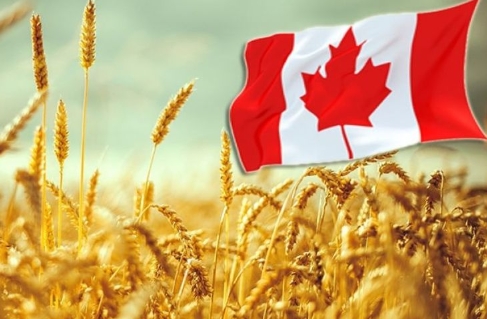
The FAS estimates that wheat planting will cover 11.1 million hectares. A March survey by Statistics Canada highlighted significant increases in spring wheat area by 193,000 hectares, primarily in Ontario, while durum wheat area remains unchanged, and winter wheat area grows by 90,000 hectares. These shifts demonstrate farmers’ response to favorable market conditions.
Total wheat output is forecasted to reach 35.6 million tonnes, the highest since the record harvest of 37.5 million tonnes in 2013-14. This increase underscores Canada’s role as a key player in global wheat markets, supported by its reputation for consistent quality.
Canada, the third-largest wheat exporter in 2023-24 after Russia and the European Union, is expected to boost exports by 2% compared to the previous year’s record of 26 million tonnes. The FAS noted that Canada’s wheat exports are well-distributed, with the top 10 markets accounting for 65% of total shipments in 2023-24, reflecting a broad customer base.
The FAS report acknowledged potential challenges in exports to the United States in May due to a trade issue but expressed confidence in Canada’s ability to redirect wheat to other markets. The report stated: “that any wheat being redirected away from the United States will find a new market.” This adaptability highlights the strength and diversity of Canada’s wheat export network.
The anticipated rise in production and exports aligns with global demand trends, particularly for premium wheat varieties. Canada’s agricultural sector continues to prioritize sustainable practices and efficiency to meet international needs while maintaining its competitive edge in the global market.
This forecast signals a positive outlook for Canadian wheat farmers and the broader agricultural economy. The projected growth in planted area and production capacity reinforces Canada’s position as a reliable supplier, contributing to global food security and market stability.