Kohn Pedersen Fox’s design for T5
When completed in the mid-2030s, T5 will accommodate 50 million passengers annually, increasing Changi’s total capacity from 90 million to 140 million passengers per year. The terminal will primarily serve Singapore Airlines and its budget carrier, Scoot, while also hosting other airlines. Wong stated: “Changi had a good reputation – it was recently named ‘best airport in the world’ – but stressed the need to invest in its continued competitiveness.”
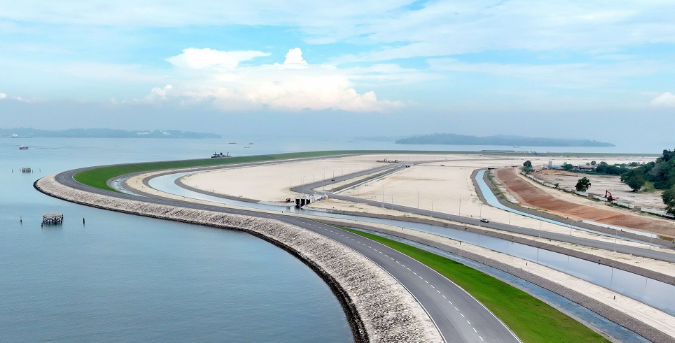
T5 will feature advanced automation, including rain-proof baggage robots, video analytics, and AI systems to enhance passenger assistance and monitoring. Security screening will occur near boarding gates at multiple points, improving efficiency. The project also includes a third runway, a second control tower, and three automated people-movers, alongside a transport hub integrating the Thomson-East Coast and Cross Island MRT lines, buses, and taxis.
Designed by U.S. firm Kohn Pedersen Fox, T5 will boast distinctive curved, overlapping roofs and incorporate sustainable features like a rooftop solar system and all-electric airside vehicles. The terminal will enable Changi to connect to over 200 cities by the mid-2030s, up from the current 170, supporting global travel and commerce.
The Asia-Pacific region, the world’s largest air travel market, is projected to double by the 2040s. Changi aims to maintain its edge over regional competitors like Bangkok’s Suvarnabhumi Airport, which will handle 150 million passengers by the early 2030s, as well as Jakarta’s Soekarno-Hatta, Kuala Lumpur International, and Vietnam’s upcoming Long Thanh airport. T5’s cutting-edge systems are expected to strengthen Changi’s dominance in the region.
This expansion aligns with Singapore’s strategy to meet growing travel demand, boosting tourism and business connectivity while supporting domestic consumption of aviation services. The project is set to create economic opportunities and reinforce Changi’s reputation as a world-class airport.