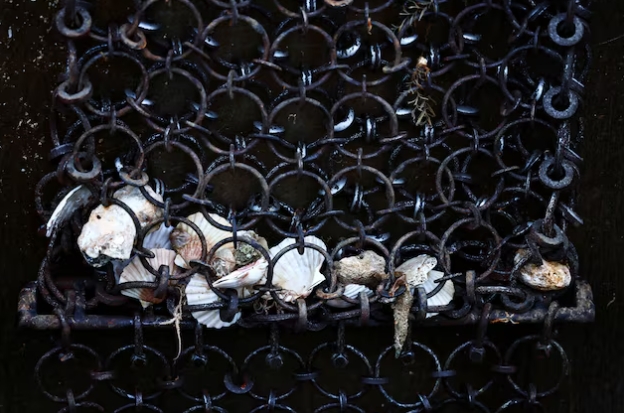
Seashells are caught in the nets of a British trawler Cornelis Gert Jan, moored in the port of Le Havre after France seized on Thursday a British trawler fishing in its territorial waters without a licence, in Le Havre, France, October 29, 2021.
Subject to consultation with the marine and fisheries sectors, the plan would prohibit bottom trawling—dragging heavy nets across the seabed—in approximately 30,000 square kilometers (11,600 square miles) of English waters, encompassing 41 Marine Protected Areas. This would build on an existing ban covering 18,000 square kilometers of seabed. The government stated that the measure would preserve essential habitats and support species like lobsters, clams, soft corals, and langoustines.
Environment Minister Steve Reed emphasized the urgency of the action: “Bottom trawling harms our valuable marine wildlife and habitats. Without prompt measures, our oceans face irreversible damage.”
The announcement aligns with the United Nations Ocean Conference, which began this week in France. The conference seeks to finalize a treaty to shield global oceans and seabeds from overfishing and other human impacts. Ahead of the event, Prince William, heir to the British throne, spoke at a gathering in Monaco on Sunday. He urged leaders in politics and business to act decisively: “We must act while we still have the chance.”
David Attenborough, whose documentary “Ocean” premiered last month, expressed deep concern about human impacts on marine environments. In an interview with Prince William, released by the prince’s office on Saturday, he described the damage to the deep ocean floor as “unspeakably awful.” He added: “If you did anything remotely like it on land, everybody would be up in arms.”
The proposed expansion of the bottom trawling ban reflects a commitment to marine conservation, balancing ecological needs with input from stakeholders in the fishing industry. The government aims to ensure sustainable practices that protect ocean biodiversity for future generations.