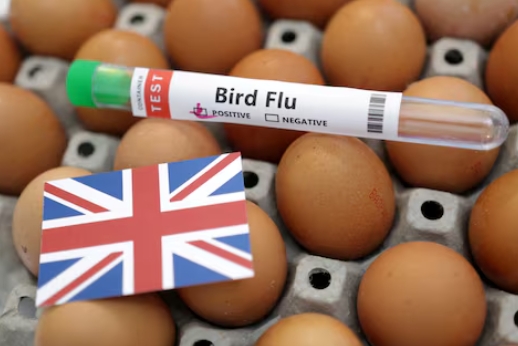
Test tubes labelled "Bird Flu" and a piece of paper in the colours of the British national flag are seen in this picture illustration, January 14, 2023.
Authorities have established a 3-kilometer protection zone, equivalent to approximately 2 miles, and a 10-kilometer surveillance zone surrounding the affected premises near Exminster in Devon. These zones are designed to monitor and restrict movement in the area, helping to prevent further dissemination of the virus.
The government statement indicated that all poultry at the site will be humanely culled as part of the response protocol. This action follows standard procedures for managing outbreaks of this nature, ensuring the safety of surrounding flocks and the broader agricultural sector.
The incident underscores ongoing efforts to monitor and mitigate risks associated with avian influenza in the region. Officials are conducting thorough investigations to trace the source and assess any potential impacts on nearby areas. Veterinary teams are on site to oversee the culling process and implement biosecurity measures.
This outbreak is part of a series of detections in the UK, highlighting the importance of vigilance in poultry farming. The government's rapid response aims to limit the virus's reach, with no immediate reports of human infections linked to this case. Farmers in the vicinity are advised to enhance their biosecurity practices, such as limiting contact between birds and wild animals.
The protection and surveillance zones will remain in place for a specified period, during which movements of birds, eggs, and related equipment will be controlled. This approach has been effective in previous incidents, contributing to the eventual lifting of restrictions once the risk is deemed low.
Public health agencies continue to emphasize that properly cooked poultry products pose no risk to consumers. The focus remains on supporting affected producers and maintaining the integrity of the food supply chain.
In related updates, the UK has been actively engaging in international collaborations to track avian influenza strains globally. This event serves as a reminder of the need for sustained surveillance in avian populations.
The government's commitment to transparent communication is evident in the timely release of information, allowing stakeholders to prepare accordingly. Further details on the zones and ongoing assessments will be provided as the situation evolves.
This confirmation aligns with seasonal patterns where migratory birds can introduce the virus. Researchers are analyzing samples to understand the specific clade involved, which could inform future prevention strategies.
Overall, the response demonstrates a coordinated effort between local and national authorities to handle the outbreak efficiently, minimizing economic and ecological disruptions.