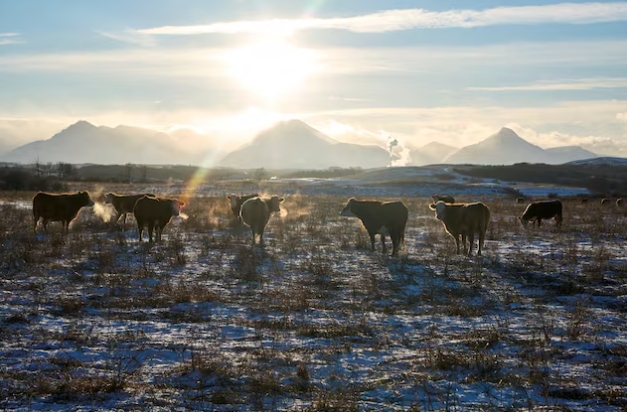
Cattle graze among a rugged landscape of southern Alberta, Canada that borders the state of Montana, United States January 18, 2025.
The Canadian government welcomed the move, highlighting its potential to benefit Canadian beef producers. Federal Agriculture Minister Heath MacDonald stated: “With restored access to Australia, a key market in the Indo-Pacific, we can unlock more opportunities for our producers to deliver the top-quality beef we're known for.” The decision is seen as a positive step for Canada’s cattle industry, which relies heavily on exports, particularly to the U.S.
The Canadian Cattle Association, representing ranchers and feedlot operators, also expressed optimism about the market reopening. In a news release, they noted that Australia was among the last countries to maintain restrictions related to mad cow disease on Canadian beef, marking a significant milestone for the industry. The 2003 ban had a profound impact on Canadian cattle ranchers, as exports form a critical part of the country’s beef production.
However, analysts remain cautious about the scale of new export opportunities. Jerry Klassen, an analyst at Resilient Capital, remarked: “U.S. beef is still very highly priced compared to Australian beef.” He noted that North American beef, including Canada’s, is among the most expensive globally, which could limit export volumes to Australia. Additionally, the U.S. faces a beef supply deficit and relies on imports from Australia, Canada, and other countries, further complicating the export outlook.
While the lifting of the ban opens new possibilities for Canadian beef producers, significant increases in exports to Australia may be tempered by market dynamics and pricing challenges. The focus remains on leveraging this opportunity to strengthen Canada’s presence in the Indo-Pacific region while maintaining the high quality that defines its beef industry.