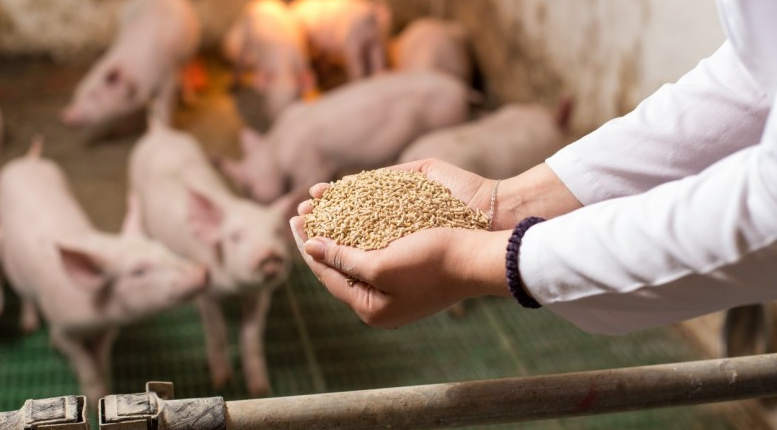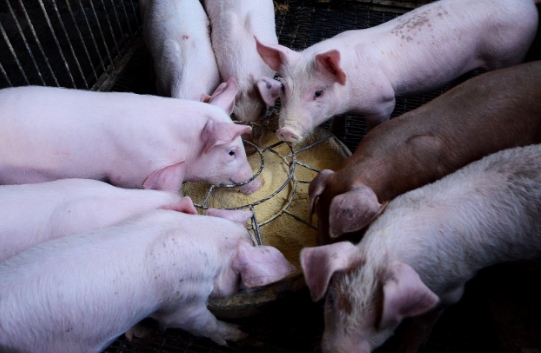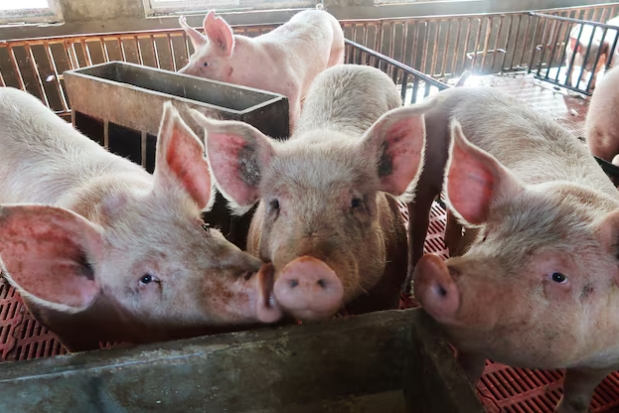
Pigs are seen on a family farm in Xiaoxinzhuang village, Hebei province, China January 25, 2018.
China hosts half of the global pig population and is facing a supply surplus in its hog sector due to weakened consumer demand. By the end of June 2025, the sow herd reached 40.43 million head, exceeding the typical level of 39 million, according to industry data.
Cash hog prices have recently fallen below 14 yuan ($1.95) per kilogram, down significantly from approximately 20 yuan a year ago, as reported by consultancy MySteel. This price drop highlights the urgency of addressing oversupply to support market stability.
The Beijing meeting will also focus on limiting “secondary fattening,” a practice where pigs are further fattened in anticipation of higher prices, and tightening controls on slaughter weights. The China Animal Agriculture Association stated: “These steps are critical for ensuring market balance and promoting sustainable growth in the hog sector.”
In July 2025, the agriculture ministry outlined plans to reduce breeding sow numbers, regulate slaughter weights, and limit new production capacity to align supply with demand. These measures follow earlier efforts in June to curb secondary fattening, which aimed to stabilize the market.
The planned reductions are expected to decrease soymeal consumption, as the industry adjusts to lower production levels. This shift occurs amid concerns about potential soybean supply challenges in the fourth quarter of 2025, influenced by global trade dynamics.
The upcoming Beijing discussions underscore China’s efforts to foster a sustainable pork industry, ensuring stable prices for both producers and consumers.