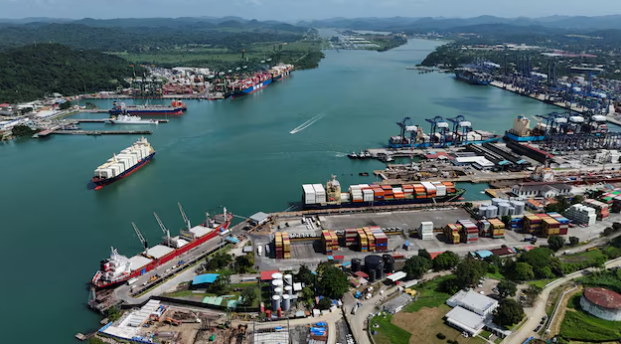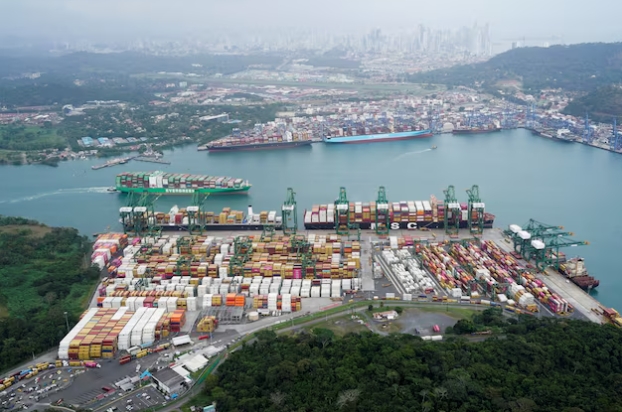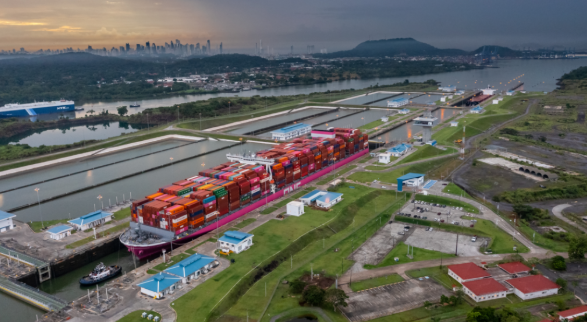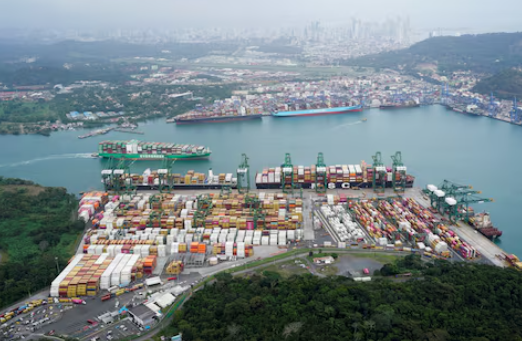
An aerial view shows containers at the Balboa Port, at the Panama Canal, in Panama City, Panama, February 1, 2025.
The new ports aim to improve cargo handling capabilities, including transshipment, storage, and gas transportation, while also securing water resources for canal operations. Ricaurte Vasquez, head of the waterway, emphasized the need for these developments at a conference on Thursday, stating: "There is a large demand for facilities and terminals." The Panama Canal Authority plans to invest approximately $8.5 billion over the next five years to modernize and expand its infrastructure, though it did not immediately respond to requests for further details.
Another significant project involves Occurrences, such as the construction of a dam on the Indio River to create a water reservoir, is facing legal scrutiny. Affected communities filed a lawsuit against the dam last month, and the case is now under review by Panama’s Supreme Court. Additionally, a tender for a liquefied petroleum gas pipeline within the canal zone is being prepared and may be launched in 2026, according to the source.
The canal’s expansion efforts coincide with shifts in port management. Panama’s President Jose Mulino has taken steps to terminate a 25-year concession agreement with CK Hutchison, a Hong Kong-based company, for operating two major ports outside the canal zone, citing unfavorable contract terms. On Thursday, CK Hutchison announced that a $22.8 billion deal to sell most of its global port operations, including the two Panama ports, to a consortium led by BlackRock and MSC, is likely to proceed. The company stated: "There is a reasonable chance of the deal going through."
These developments reflect Panama’s commitment to strengthening its role as a global trade hub while addressing operational and environmental challenges. The Panama Canal Authority continues to prioritize transparency and competition in its bidding processes to ensure qualified companies undertake these projects.