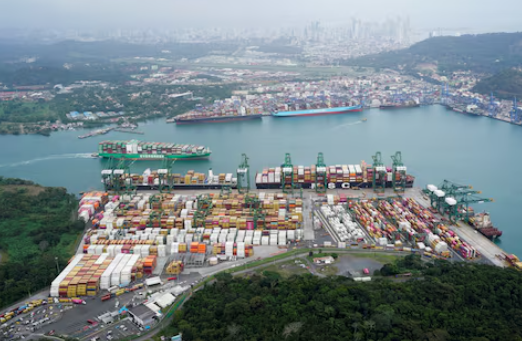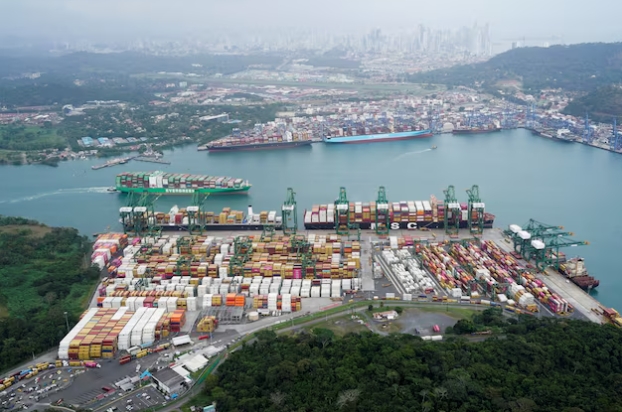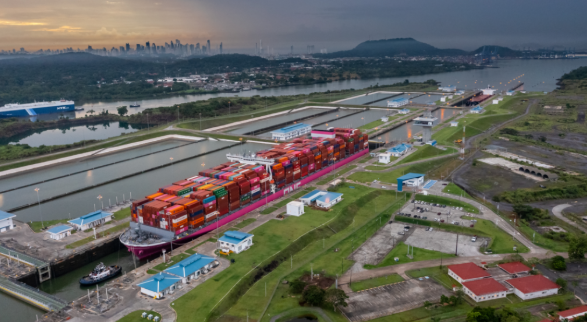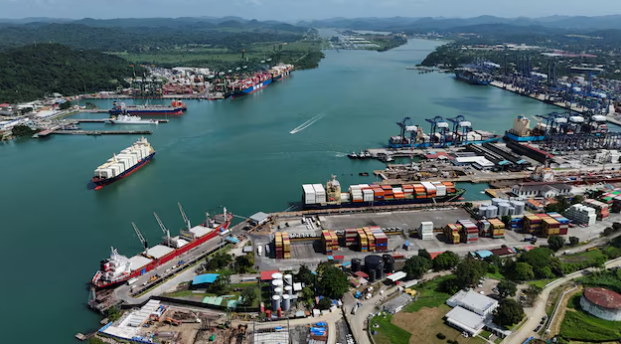
A drone view shows the Panama Canal area in Panama City, Panama, June 20, 2025.
The planned meetings will focus on sharing technical details, investment requirements, and operational conditions for the port projects. The Authority intends to evaluate the companies’ capabilities and proposals before beginning the prequalification process, which is expected to be completed by early 2026. Vásquez emphasized that these projects are part of the canal’s broader strategy to diversify its sources of revenue and improve services for international trade.
The two proposed ports are expected to support increased maritime traffic and facilitate the movement of goods through the canal, particularly as global trade patterns evolve. The development would also contribute to greater efficiency in cargo handling and storage, reducing delays caused by congestion at existing terminals. According to Vásquez, the projects will focus on sustainability and environmental protection, incorporating modern technologies to minimize emissions and improve energy efficiency in port operations.
The canal’s expansion efforts come amid ongoing challenges from drought conditions that have affected ship transit capacity over the past year. Water availability remains a key concern for the Authority, which continues to monitor rainfall and water reservoir levels closely. Vásquez noted that infrastructure investment is essential to maintaining the canal’s competitiveness and reliability, especially as other trade routes continue to expand.
Shipping companies from Asia, Europe, and the Americas are expected to attend the December meetings. The Authority plans to outline the technical and regulatory framework for participation, including construction standards, environmental guidelines, and concession models. “Our goal is to attract partners who share our long-term vision for sustainable growth,” Vásquez said.
The Panama Canal, a critical link for global trade between the Atlantic and Pacific Oceans, has been expanding its logistics offerings in recent years to include auxiliary services such as fuel supply, repair facilities, and cargo management. The new port projects are seen as a continuation of this strategy, reinforcing Panama’s position as a leading maritime and logistics center in the Western Hemisphere.
Vásquez added that once the prequalification process concludes in early 2026, the Authority will move forward with detailed proposals and tendering procedures. The projects are expected to generate investment opportunities and enhance the canal’s operational capacity to meet growing demand from international shipping lines.