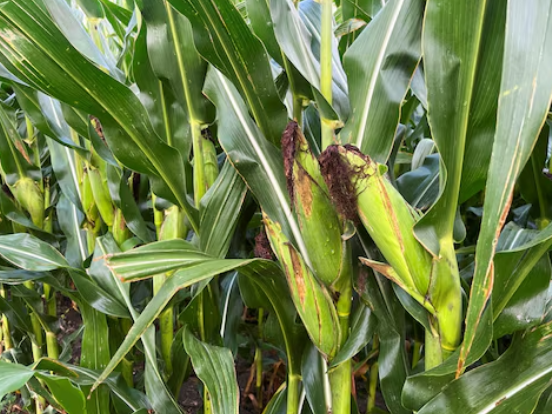
Ears of corn are pictured after an early August rain shower, near West Point, Iowa, U.S., August 5, 2023.
According to the USDA’s monthly supply-and-demand update, U.S. corn supplies are projected to increase by 59% to the highest level in seven years. At the same time, exports are forecast to reach record volumes. While the larger crop may pressure the farm economy due to lower crop prices and higher production costs, it is expected to benefit livestock producers and ethanol manufacturers by improving feed and raw material availability.
The USDA raised its 2025 corn production estimate to a record 16.814 billion bushels. Average yields are forecast at 186.7 bushels per acre, down slightly from August’s projection of 188.8 bushels but still exceeding market expectations. Despite reduced yield forecasts, overall production rose as the USDA increased its estimate for harvested acreage.
Susan Stroud, founder and analyst at No Bull Agriculture, said: "It didn't matter that USDA reduced the corn yield, because of the amount of corn acreage they found."
Chicago Board of Trade corn futures showed little reaction to the harvest outlook, with traders focusing on the possibility of future forecast revisions. Analysts noted that favorable weather through much of the summer boosted yield potential, though localized crop disease and late-season dryness slightly reduced expectations.
The USDA projected end-of-season corn stocks for 2025/26 at 2.11 billion bushels. This figure is marginally below last month’s forecast but still marks the highest level since the 2018/19 season.
For soybeans, the USDA forecast a yield of 53.5 bushels per acre, nearly unchanged from 53.6 in August. Production was estimated at 4.301 billion bushels, slightly higher than last month’s 4.292 billion, due to an upward revision in harvested acreage. The agency also raised its soybean ending stocks forecast by 10 million bushels.
However, soybean export projections were lowered to the weakest level in several years. Export sales have slowed, with overseas buyers reducing purchases of U.S. soybeans, the report said.
The USDA’s September estimates highlight contrasting impacts across the agricultural sector. Larger corn and soybean harvests will expand supplies and support end users, but lower prices and higher costs continue to weigh on farm revenues. Inflation-adjusted cash crop receipts are forecast to fall to their lowest level since 2007.