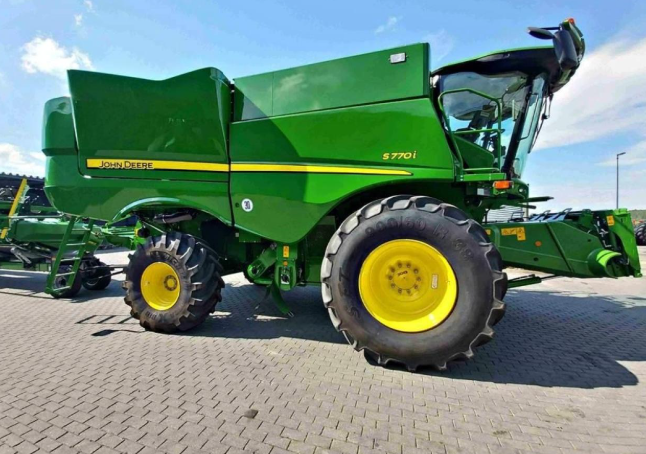
The company identified weaker demand in the large agricultural equipment segment as the primary factor behind the annual reduction, influenced by global trade conditions, macroeconomic factors, and weather-related challenges affecting farming operations worldwide.
In contrast, the fourth quarter ending November 2, 2025, showed positive momentum, with revenue rising 11 percent year-over-year to $12.4 billion and net profit reaching $1.065 billion.
John Deere Chairman and CEO John May commented: "The past year brought its share of uncertainty, but thanks to the structural improvements we implemented and the diverse customer segments we serve, we were able to achieve our best results to date in the cycle."
Looking ahead to fiscal 2026, the company provided guidance for net income between $4 billion and $4.75 billion. Management anticipates growth in the small agriculture and turf equipment segment, as well as continued strength in construction and forestry equipment divisions.
The results reflect the cyclical nature of the agricultural machinery market, where periods of lower farm income and reduced equipment replacement typically follow years of high commodity prices and strong investment. John Deere noted that its diversified portfolio across agriculture, construction, and forestry helped mitigate the impact of the downturn in large tractor and combine sales.
The company continues to invest in precision agriculture technologies and sustainable farming solutions, positioning itself for long-term growth as global food production requirements increase. Fourth-quarter performance demonstrated resilience in certain regional markets and product categories, supporting expectations for gradual recovery in the coming year.
Shareholders and industry observers will monitor commodity price trends, interest rate developments, and farm income levels throughout 2026, as these factors traditionally influence equipment purchasing decisions. John Deere remains focused on operational efficiency and innovation to navigate varying market conditions while maintaining its leadership position in agricultural technology and machinery.