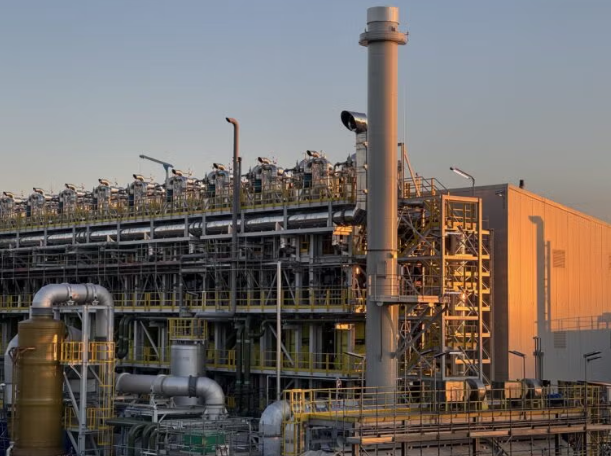
The facility’s major equipment has been installed, with commissioning set to continue over the coming months. HyProMag, the exclusive licensee of the patented HPMS technology developed by the University of Birmingham, has an agreement to utilize the plant’s infrastructure. The project received significant funding from the U.K.’s Driving the Electric Revolution, an Industrial Strategy Challenge Fund managed by UK Research and Innovation.
HyProMag aims to sell 0.5 tons of recycled NdFeB powder monthly by July’s end, scaling to at least 2 tons per month by the end of 2025, with potential expansion to 100-350 tons annually in 2026. The NdFeB powder, with over 28% rare-earth content, has a low carbon footprint compared to other sources. Initially, it will be sold for chemical processing, but future plans include in-house magnet manufacturing following the commissioning of powder processing and sintering equipment by Q3 2025.
Will Dawes, Mkango’s Chief Executive, stated: “This is a major milestone for Mkango, HyProMag, the University of Birmingham and all our stakeholders.” Nick Mann, Managing Director of HyProMag, said: “Seeing first HPMS powder production from the commercial scale vessel at Tyseley is a credit to the dedication and vision of the combined HyProMag and University of Birmingham teams.” Allan Walton, Head of the Magnetic Materials Group at the University of Birmingham, added: “The Magnetic Materials Group has been at the forefront of research into recycling of rare earth magnets since Emeritus Prof Rex Harris conceived the idea.”
The plant supports a pilot program supplying NdFeB powder and magnet samples to customers, aiding marketing and operational scale-up in the U.K., Germany, and the U.S. HyProMag is also developing a facility in Pforzheim, Germany, targeting production by late 2025, and a U.S. operation, with a feasibility study completed in 2024 and production planned for early 2027.
This initiative advances sustainable rare-earth recycling, supports industrial needs, and strengthens the U.K.’s critical minerals sector.