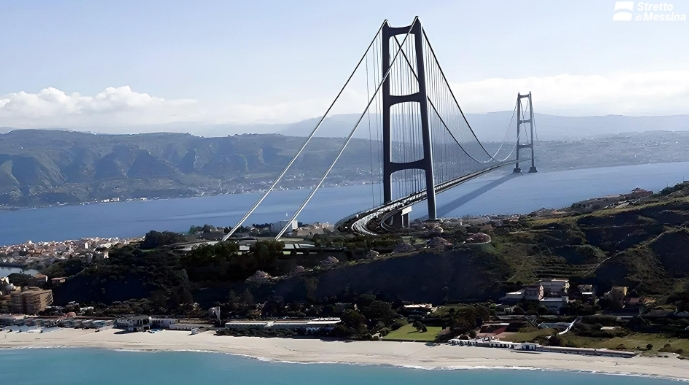
The bridge over the Strait of Messina will be 3,666m long
The bridge’s design includes two 399-meter-tall steel towers supporting a 60-meter-wide deck with three vehicle lanes in each direction, two rail lines, and two service lanes. It will accommodate up to 200 trains daily and 6,000 vehicles per hour. The suspension cables, measuring 1.26 meters in diameter and 5,320 meters long, represent a significant engineering achievement. The deck will maintain a 72-meter sea clearance, slightly reducing to 70 meters under full load with vehicles and two passenger trains crossing simultaneously.
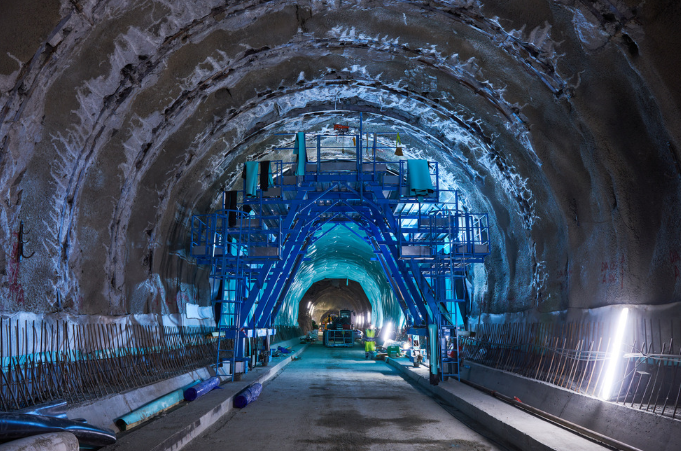
Designed to withstand earthquakes and winds up to 292 km/h, the bridge incorporates an intelligent monitoring system for predictive maintenance. The Eurolink consortium, led by Webuild, includes Japan’s IHI, Spain’s Sacyr, and Italian companies Condotte and Itinera. The project also involves 40 kilometers of road and rail upgrades, three train stations in Messina, and a multifunctional center in Calabria. Webuild stated: “All of these complementary works will profoundly change mobility for the two regions, whilst protecting the surrounding environment.”
The bridge project has a long history, with initial plans dating back to a 1969 competition by Italy’s public works ministry. Construction was relaunched in 2003, and in 2006, Eurolink, then led by Salini Impregilo (now Webuild), won the design and build contract. Work was halted in October 2012 by an Italian law-decree but resumed in March 2023 under a new decree.
Webuild’s chief executive, Pietro Salini, remarked: “The renewed project marks the start of a new season of vision, courage and confidence in the capabilities of Italian industry and the entire infrastructure sector.” The bridge is expected to enhance regional connectivity, improve transportation efficiency, and support sustainable development in Sicily and Calabria.
This initiative, combining advanced engineering with environmental considerations, reflects a collaborative effort to modernize infrastructure while addressing the unique challenges of the Strait of Messina’s seismic and climatic conditions.